huffpost Press
They’re Trudging Through Deep Snow And Dangerous Conditions — All To Escape Trump’s America
Images
1 / 8
2 / 8
3 / 8
4 / 8

5 / 8

6 / 8

7 / 8

8 / 8
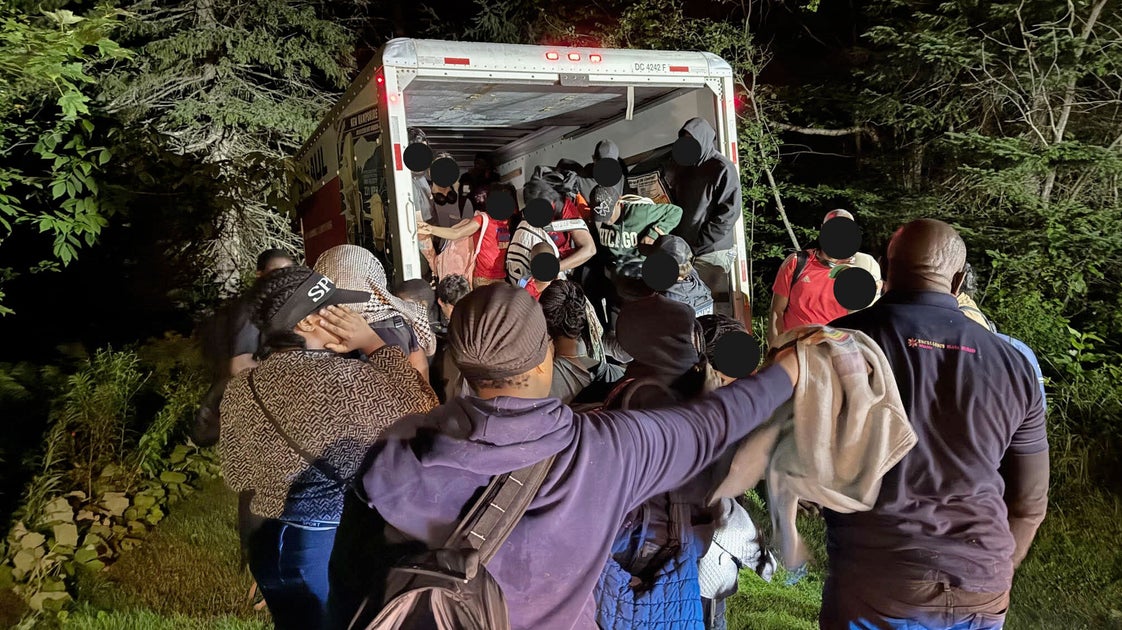
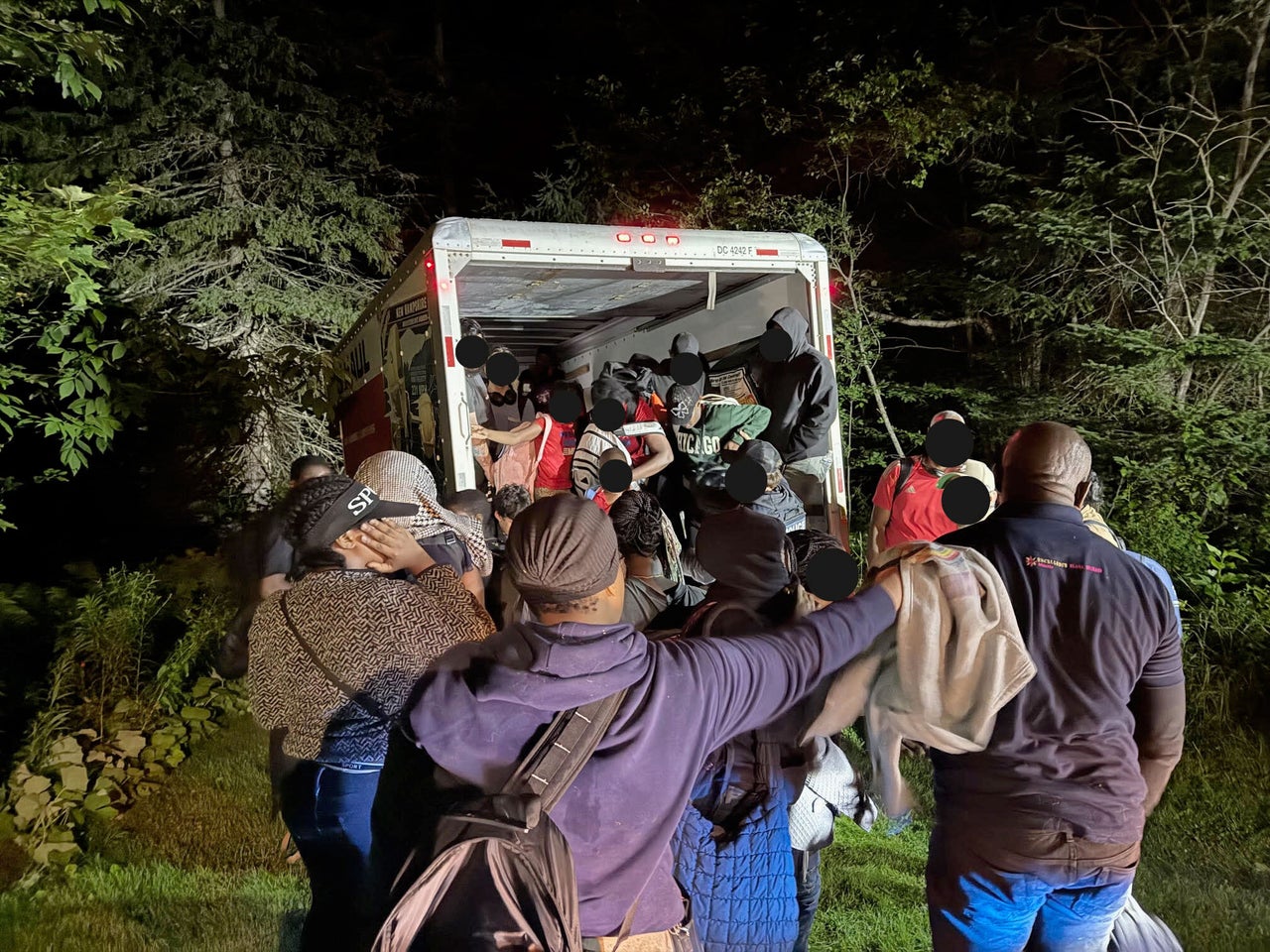
Early one Sunday morning last August, the Royal Canadian Mounted Police stopped a U-Haul truck just over the Canadian border. Inside the trailer, no larger than a small bedroom, were 44 people struggling to breathe, including a pregnant woman and a 4-year-old child. They were mostly Haitians, who had paid smugglers thousands of dollars to get them out of the country that they previously considered safe: the United States.

Many Haitian immigrants who have been living in the U.S. have chosen to undertake the expensive and treacherous process of crossing the Canadian border, rather than waiting to see if they’ll be deported by the Trump administration.

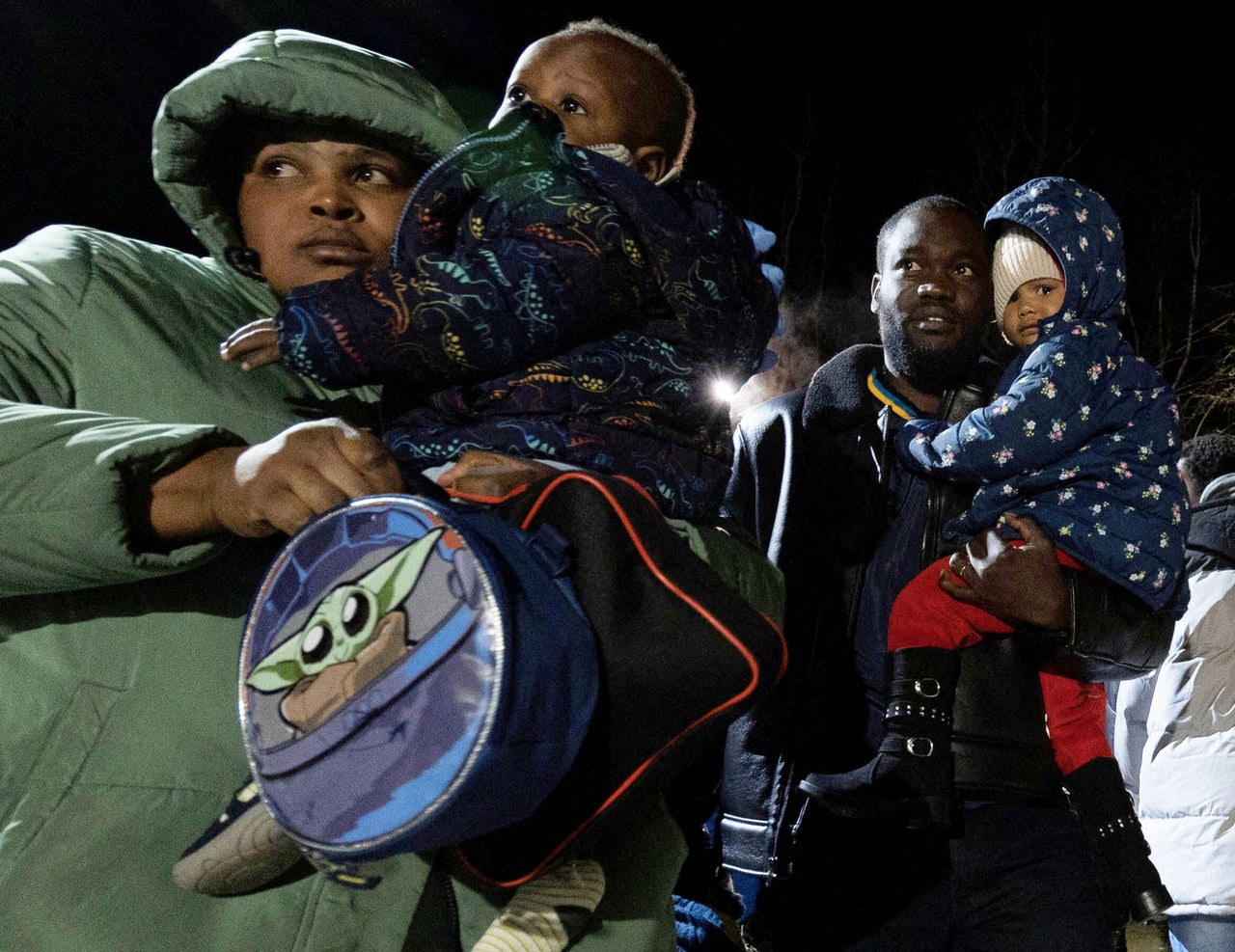
The first step of the journey, according to lawyers and immigrant advocates, is to get as close to the border with Quebec as possible without catching the attention of a guard. There, a smuggler, paid upward of $5,000, puts Haitians — who are allowed only one small bag — into a vehicle and drives across the border. Or the smuggler may guide Haitians through the woods for hours, which can mean trudging through deep snow and surviving below-freezing temperatures or, in the case of the people seeking refugee protections who were arrested last summer, wading through chilling waters. (At least 15 migrants have died making this trip in recent years.) The destination is usually Montreal, the French-speaking city where tens of thousands of Haitians have settled.

Since Donald Trump’s return to office, Haitians living legally in the U.S. have sought out this dangerous journey to apply for refugee protections in Canada, fearing the administration would revoke their special immigration status and deport them to their homeland, which is plagued by violence and extreme poverty. After all, Trump has maligned the nation and its people for years. During his first term, he infamously referred to Haiti as a “shithole,” and during a 2024 presidential debate, he repeated the racist lie that Haitians living in Springfield, Ohio, were eating pets.

Despite the many risks, getting smuggled into Canada has been worth it for many Haitians because applying for refugee status only required one more step: staying for 14 days without being detected. To prove their arrival date, many Haitians took a selfie with the front page of a Canadian newspaper, which they could show to authorities when they turned themselves in to start their claim. Protected from deportation, at least temporarily, they could obtain work permits and health care while waiting for possible permanent residency.

That is, until recently. Last month, a new, sweeping immigration law did away with this two-week period. Now, individuals can’t file a refugee claim if they’ve been in Canada for more than a year, even though life circumstances or fear could prevent someone from applying right away. Under the new rules, Haitians who cross the U.S.-Canada border illegally won’t be eligible to apply for refugee protections. Instead, they’ll be placed into an immigration process that gives them little chance of becoming a permanent Canadian resident.

Today, many Haitian immigrants living in the U.S. have to make a dangerous decision: stay and potentially get deported to Haiti or take a bigger gamble than ever on finding safety up north.

The U.S. created temporary protected status to harbor foreign nationals from countries facing political or natural disasters. Haiti has dealt with both throughout its history, and was granted TPS after an earthquake killed more than 300,000 people in 2010. The first Trump administration attempted to terminate the program for Haitians, sending a wave of them to Canada to seek protection.

President Joe Biden redesignated TPS following the assassination of Haiti’s president in 2021. Someone must be physically present in the U.S. to apply for TPS, but Biden introduced a program in 2023 that allowed some people from Haiti to apply for humanitarian parole while still in their home country, as long as they had a U.S. sponsor. They could then legally enter the U.S. and apply for work permits, and could eventually apply for other statuses, including TPS.

Trump tried to eliminate these protections for Haitians when he reentered office, first ending the Biden program last summer and rendering more than 200,000 Haitians suddenly undocumented. Then, in November, the administration announced it would terminate TPS in February 2026. A federal judge blocked that from going into effect, but the case was appealed to the Supreme Court, which will hear oral arguments on it on April 29.

Even with Trump’s order on hold, some are too afraid of U.S. Immigration and Customs Enforcement to risk staying. Marie Ange Blaise, a Haitian woman, died in a Miami detention center last year, and Emmanuel Damas, a Haitian man living in the Boston area, died in an Arizona jail last month.

One client told his lawyer, Carl Alphonse, that he risked his life going to Canada because he was afraid of ICE. “He wanted to have control over his life,” said Alphonse, who practices immigration law in Ontario. “In the U.S., he felt like every single day he was looking over his shoulder.”

The idea that ICE will detain and deport people, regardless of immigration status, is pervasive.

“The perception is that they’re not going to follow rules. Even if you are here legally, they’re going to try to force you to leave,” said Mike, who works directly with refugee and immigrant communities in New York and is being identified by only his first name because he’s worried about the safety of the people he helps.

The legal whiplash for Haitian immigrants in the U.S. has led more to look toward Canada out of fear that they’ll be deported, according to advocates.

“These are people who have lived in the United States for years or decades, who had good jobs and who had children in the U.S.,” said Melissa Claisse, the director of development and impact at the Welcome Collective, a Montreal-based nonprofit organization that provides services to refugees.

It’s difficult to pinpoint exactly how many Haitian immigrants have chosen the smuggler route. The Canadian Border Services Agency collects data on irregular border crossers who make refugee claims and their nationalities, but it doesn’t publish data about where they lived before entering Canada.

The Safe Third Country Agreement is a refugee-sharing policy that the U.S. and Canada signed in 2004. Part of the agreement is that refugees are supposed to make a claim in the first “safe” country they reach. The original policy, however, only applied to legal ports of entry. So, Haitians and other immigrants who had legally entered the U.S. could cross into Canada illegally, present themselves to officials and start the refugee protection process, even if they should have done so in the U.S.

But in 2023, Biden and Canadian Prime Minister Justin Trudeau updated the agreement so that anyone who crossed from the U.S. to Canada — whether legally or not — would be returned to the U.S. Among the few exceptions to this was one for those who had managed to cross the border and remain in Canada undetected for 14 days.

The agreement change was meant to stem the flow of refugees into Canada, as Trudeau critics said the number of people entering the country was unsustainable. Instead, the updated policy just sent more people underground, compelling immigrants to use the services of smugglers in order to cross undetected and stay hidden until they could make their claim, but that’s no longer an option.

“You have forced people to choose dangerous routes because you closed the border,” said Gauri Sreenivasan, the executive director for policy and advocacy at the Canadian Council for Refugees. “You essentially force desperate people to cross between ports of entry.”

The refugee claim process takes an average of three years, with a backlog of 30,000 pending applications. But applicants were able to get work permits and access to health care as they waited for their claim to process, meaning they could begin to establish themselves in the country they hoped to call home. Between 2012 and 2025, about 4,500 Haitians were granted refugee status and more than 1,400 claims were rejected, according to the CBSA.

Canada has long been considered a safe haven for immigrants, but it has not been immune to the anti-immigrant backlash that has recently swept the globe. The same year that Trump’s pledge for mass deportations sent him back to the White House, a majority of Canadians said for the first time in three decades that immigration levels were too high.

“We are seeing the erosion of the public consensus in Canada around immigration like we haven’t seen in decades,” Sreenivasan said.

Trudeau promised to toughen border security while his Liberal Party began reducing the number of foreigners allowed to permanently reside in Canada. His successor, Mark Carney, pledged to continue cutting the number of foreign students and workers allowed to stay in the country. It’s already having an impact: Last year, Canada reported its first population decline since it became independent, mostly due to a reduction in non-permanent residents. Deportations are also surging. The Canadian border agency said it removed 22,500 people in 2025, an all-time high.

But Haitians who fled the U.S. are counting on not being deported, even if they have no legal status.

Over the last two decades, Canada has periodically suspended removals to Haiti because of the security risk there, and such a pause is in effect right now. However, the moratorium only applies to people the government doesn’t consider a threat to public safety — and officials have a lot of leeway when making that determination.

“Criminality is defined rather largely, so it covers people who have been convicted of crimes that the average person might not see as being major,” Claisse said.

Over 2,200 Haitians met the criteria to be considered guilty of criminal behavior and were deported to Haiti last year — more than double the number from 2024.

The new immigration reform law, known as Bill C-12, passed with broad support from Carney’s Liberal Party. The biggest changes are to the refugee process.

Now, when immigrants present themselves at the border, instead of having their case heard by a board of immigration and refugee experts, they will be put into a process known as pre-removal risk assessment to determine whether they should be sent back to their country of birth. Whether a PRRA application is rejected is at the government’s discretion, and the process has a much lower acceptance rate than refugee protections, according to Claisse.

The PRRA process doesn’t offer the same benefits as the process of applying for refugee protections, and only some people are eligible to apply for a work permit and access to health care.

If the government rejects a PRRA claim, the applicant is ordered to leave Canada or face deportation. But because of the suspension on removals to Haiti, most Haitian immigrants will likely be ineligible for deportation and thus will stay in Canada — just without legal status. This puts them in a precarious position, unable to legally work and at risk of being exploited by unscrupulous employers.

The new policy is retroactive: Anyone who arrived in Canada after June 24, 2020, and waited more than a year to make their claim won’t be able to apply for refugee protections. Some of the applicants who have been waiting for years may now suddenly be ineligible for protections, but they won’t know for sure until officials from the Canadian government contact them.

The new law increases spending on border security and enforcement, raising the chances Haitian migrants will be caught trying to cross and sent immediately back to the U.S.

“If you hand people back to ICE custody, you’re handing them back to peril,” Sreenivasan said.

Some Haitian immigrants are not waiting for the next threat from the White House or for the Supreme Court to decide their fate. Even with the new restrictions in Canada, Haitians are still planning to head north.

“They don’t have a lot of options at this point,” said Mike, the refugee advocate. “Some of them are saying, ‘I got to get out of here.’”