yahoo Press
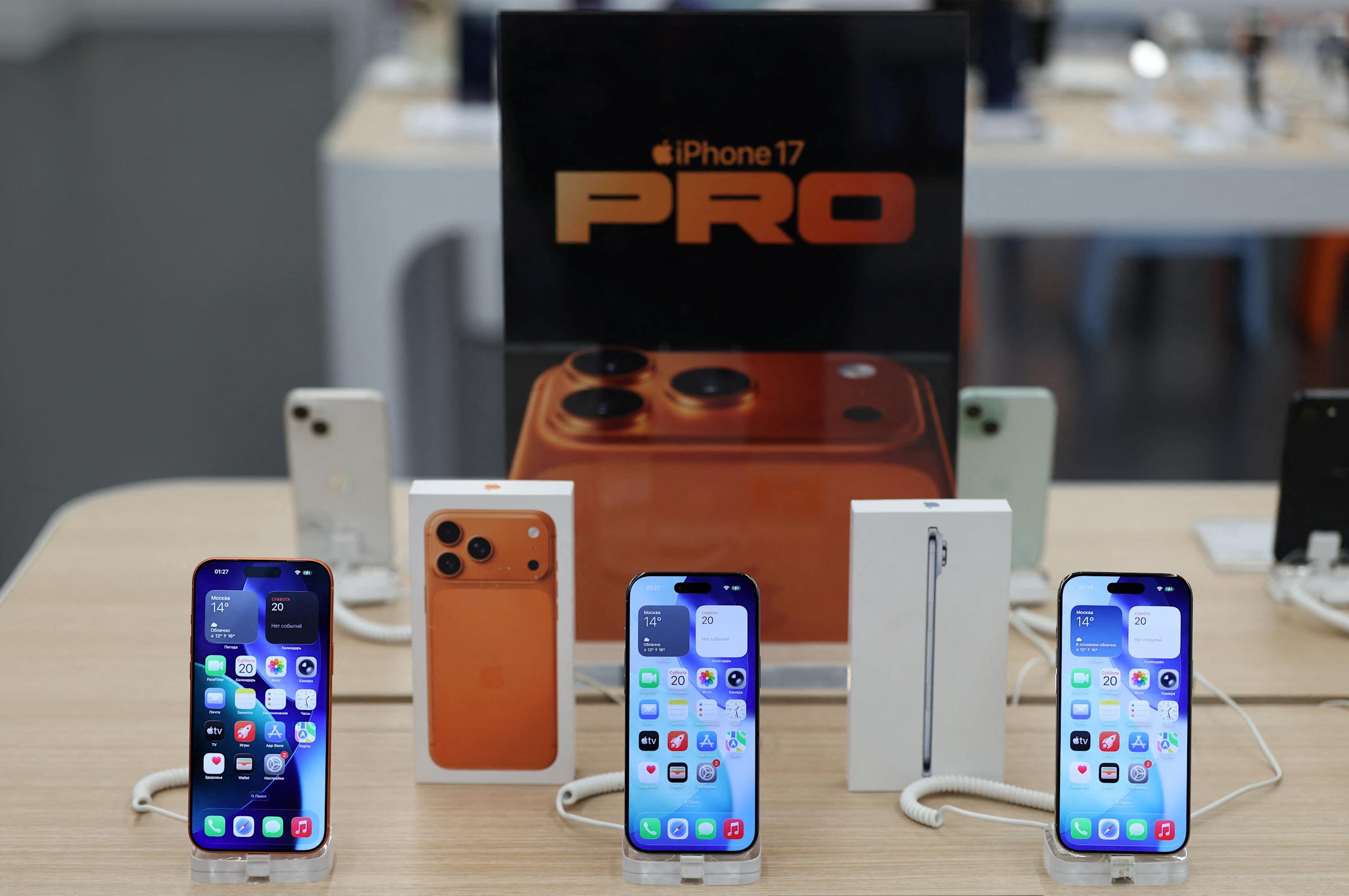
Apple's iPhone sales continue to surge as iPhone 17 outpaces iPhone 16
Images
1 / 7
2 / 7

3 / 7

4 / 7

5 / 7
6 / 7

7 / 7
Apple’s (AAPL) iPhone continued strong sales last month, thanks to the popularity of the iPhone 17 line, Bernstein analysts wrote in an investor note on Monday.

According to the report, Global iPhone sell-through — that is, sales of iPhones from retailers to customers — increased 26% year over year in February. Overall, the analysts say iPhone 17 unit sales are up 20% versus last year’s iPhone 16 through September and January.

The base model iPhone 17 accounted for 39% of that growth, while the iPhone 17 Pro Max made up 21% of the increase.

Average selling price, or ASP, also climbed in February, growing 6.9% year over year. So far, ASP has improved each month since the iPhone 17 launched in September, with the exception of October, Bernstein said.

The analysts said China provided the biggest boost to ASP, with growth of 20.2% year over year.

On the flip side, however, Bernstein said that January and February iPhone revenue is estimated to have been $35.7 billion, below the firm’s anticipated $56.5 billion.

Apple reported record iPhone revenue of $85.3 billion in its Q1 earnings in January, well ahead of Wall Street estimates of $78.3 billion. The company saw iPhone sales of $69.1 billion in the same period last year.

On the Mac side, Bank of America Global Research analyst Wamsi Mohan said that if Apple’s new MacBook Neo can grab 10% of market share in the entry-level laptop space, the $599 computer could provide an additional $0.03 earnings per share for 2026.

“We see the intro of Neo as a meaningful tailwind to Mac revs and total company EPS as the majority of revenue should be incremental to Apple,” Mohan wrote in a note to investors.

Apple unveiled the Neo in March as its least expensive MacBook. The 13-inch laptop runs on the company’s A18 Pro processor, which is similar to the chip found in the iPhone 16 Pro and Pro Max.

If the Neo proves successful, Mohan explained in his note, it could provide a benefit to Apple’s services business, the company’s second-largest segment behind the iPhone.

“The iPhone installed base is ~1.5bn units, far above the Mac installed base at ~260mn. If the Neo is successful at driving adoption of [first] time Mac buyers, the overall installed base for Apple becomes stickier and can lead to [increased] services use over time,” he wrote.

Apple, like the rest of the consumer technology industry, is also, however, contending with the global memory supply crunch caused by the worldwide AI data center build-out.

Memory makers are focusing on producing more high-margin memory for AI data centers versus memory for consumer electronics products, causing a supply bottleneck and increasing costs.

That could force companies like Apple to either raise the price of their products or swallow the increase, cutting into their own margins.

Email Daniel Howley at dhowley@yahoofinance.com. Follow him on Twitter at @DanielHowley.

Click here for the latest technology news that will impact the stock market

Read the latest financial and business news from Yahoo Finance