Press
On the road to Rogun Dam, Tajikistan’s ‘greatest dream’
Images
1 / 4

2 / 4

3 / 4

4 / 4
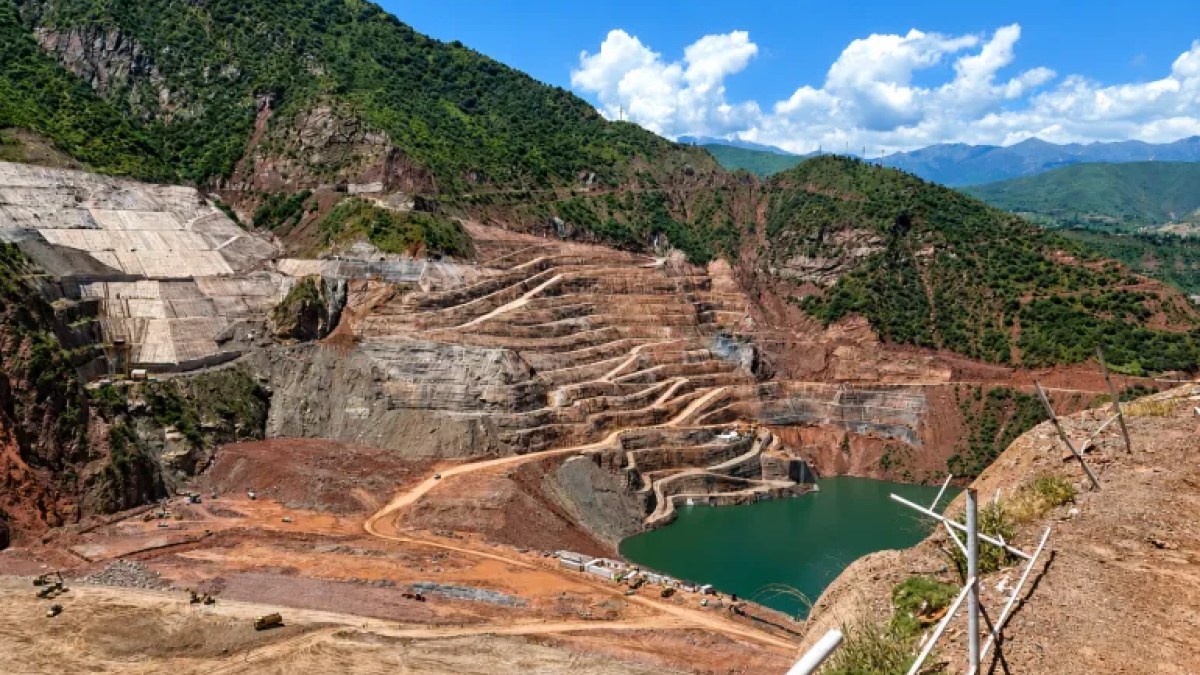
Al Jazeera visits the site of the Rogun dam construction, Tajikistan’s ‘project of the century’.

Save

Share

Rogun, Tajikistan – From Dushanbe, the journey to Rogun begins like many journeys in Tajikistan. You approach the edges of the capital with its wide, quiet streets and tidy parks, then the urbanisation begins to fade. The road turns into a long ribbon that climbs and bends between rocky hills and small villages, before the Vakhsh River appears below like an angry blue thread slicing through the valley.

There are no “touristy scenes” on either side of the road – no luxury hotels, no large billboards, and no restaurants competing to welcome passersby. Only silent mountains, heavy trucks and workers heading towards a grand project almost every Tajik has heard about: the Rogun Dam.

In a country that knows the true meaning of winter cold, power outages and harsh geography, the idea of this dam has become much more than a mere wall holding back water. It has become a promise of so much more.

Indeed, the $5bn Rogun project, originally launched in the mid-1970s to tackle Tajikistan’s chronic energy shortages, has been described by President Emomali Rahmon as a matter of “life or death”.

The country, which has long suffered from winter power shortages, sees the dam as an opportunity to reduce the seasonal deficit, improve power supplies, and perhaps eventually export the surplus to neighbouring countries.

It takes about two hours to drive from Dushanbe to Rogun. The road itself is just part of the story. Every turn opens up a new scene: sharp rocks covered in green, deep valleys, scattered houses, and a river that never stops flowing.

Along the way, trucks loaded with stones and heavy materials pass by, and it is increasingly clear that this project is not being built on easy terrain.

Everything seems difficult: access, excavation, transportation, and controlling a river that rushes down from the heights of Central Asia.

Approaching the site, the features of Rogun begin to appear, not as a complete picture all at once, but as scattered pieces of a much larger scene: dirt roads, giant equipment, excavated mountains, tunnel entrances until, finally, the dam takes shape.

The first thing visitors to Rogun will notice is not just the sheer height of the dam, but the vast size of the entire operation which resembles a working city suspended between the mountain and the river.

As the sounds of machinery echo through the rocks, dust rises and workers move as if part of a colossal, restless machine.

The mountain appears to have opened from the inside. There is no single facade for the project, but rather multiple levels, entrances and pathways. You see a road descending downwards, another ascending towards the work area, and a third leading to the opening of a dark tunnel that appears as a doorway to the bowels of the earth.

Rogun is not just a wall holding back water, but an entire network of tunnels, diversions, canals and facilities beneath and around the mountain. The water does not come up against concrete alone; it passes through complex engineering designed to tame the Vakhsh River and convert its power into electricity.

At the tunnel entrances, the harsh exterior light recedes, the air becomes colder, and the sound of machinery takes on a deep metallic echo. Inside, you can’t see the river, but you can feel it as it is directed, diverted, pressurised, and then released through these arteries towards the turbines which power homes, factories and schools.

The project includes hydraulic tunnels ranging in length from 1,100 to 1,500 meters, and an underground power station housing six units.

In the part of the project designated for the power plant, the vision for all this becomes much clearer. This is where the water which has descended from the mountains is released with calculated force, and sent hurtling toward massive turbines that spin under pressure and convert the water’s movement into electricity which will power cities and villages, factories and homes, hopefully providing some relief from the harsh winters, and perhaps an economy less dependent on the outside world.

Close to the construction site, Italian engineer Andres – part of the team from the Italian company Webuild, which is overseeing the main works at the Rogun Dam – speaks with enthusiasm.

Pointing to the mountain and then to the riverbed, he tells those present that upon completion, the dam will stand 335 metres high, making it one of the tallest in the world. The power plant has also been designed with six massive units capable of producing approximately 3,600 megawatts of electricity.

This, he explains, is a complete integrated system: a dam with a clay core, hydraulic tunnels, an underground power plant, and colossal turbines that will gradually come online as the project’s phases are completed.

It has literally harnessed the strength of the mountain, he says. “We are not building over nature; rather, we are trying to understand it and harness its energy safely.”

Today, Rogun occupies a place in the national imagination as the “Project of the Century.” This mountainous nation may lack vast oil reserves, but it possesses something else: rivers cascading down from mountain peaks, and water that can be converted into power. Thus, the dam represents Tajikistan’s gamble on its own geography, and an attempt to turn adversity into strength.

Yet, this gamble is not without risk. As its Italian manager says, a project of this magnitude requires massive funding, meticulous management, stringent safety guarantees and a delicate balance with downstream countries which are closely monitoring water flows.

Geographically and politically, the water gathering behind the dam does not belong to Tajikistan alone; it is part of a sensitive regional water system.

“The mountain here is not merely an obstacle, but a part of the project’s strength. We are not building over nature; rather, we are trying to understand it and harness its energy safely.”

On the way back to Dushanbe, the mountains gradually begin to recede, but the image of the dam lingers. The dark tunnels, the waiting turbines, the heavy trucks, and the river flowing stubbornly between the rocks; together they sum up Tajikistan’s relationship with water.

When you arrive in the capital in the evening and the lights shine along Rudaki Avenue, it is hard not to see them differently. Electricity is not just an ordinary utility. It is an extension of that distant river, that open mountain, and those tunnels where men work unseen by most of the population.