Press
Student loans inquiry finds many did not understand repayment terms
Images
1 / 10

2 / 10

3 / 10
4 / 10

5 / 10

6 / 10
7 / 10
8 / 10

9 / 10
10 / 10
Thousands of people have told a parliamentary inquiry that they did not understand the terms and conditions on their student loans before they took them out.

More than 52,000 people responded to a call for evidence by the Treasury Committee for its inquiry on the taxation of graduates - more than half said they did not understand what they had signed up for.

The inquiry is looking at all student loan plans in England and whether repayment terms are "reasonable".

Treasury Committee chairwoman Dame Meg Hillier, said "the massive scale and strength of frustration and upset is powerful."

The inquiry was launched following controversy over Plan 2 loans, which were issued in England between September 2012 and July 2023 and are still issued in Wales.

Graduates with Plan 2 loans have been paying back 9% of everything they earn over the repayment threshold which currently stands at £28,470.

This threshold will remain frozen at £29,385 from 2027 to 2030, rather than rising with inflation.

That means graduates will effectively start repaying sooner and those earning above the threshold will see a greater proportion of their salary subjected to student loan repayments than they would have done.

In April, after the inquiry was launched, the government said interest on some student loans in England will be capped at 6% in the next academic year to protect graduates from the risk of rising inflation due to the Iran war.

Campaigners have welcomed this but called for wider reforms to the system.

Alex Stanley, vice-president of the National Union of Students, said the data showed "how damning the situation is".

"Students and graduates already knew this was the case, because we are living it. Governments have repeatedly changed the terms, in a move that no bank could do, making the conditions worse while we have no option but to take the financial hit".

As part of its inquiry, the committee invited anyone over the age of 16 to share their experiences.

Of the 49,357 respondents who have taken out student loans:

However, most said they would not have been able to attend higher education without a student loan.

"Unfortunately, what these findings tell us is that far too many young people feel over-burdened and demoralised by their student debt," Dame Meg said.

The committee will now consider the different options before making some recommendations for change.

In its report, the committee states that there is a strong perception that "poorer and middle-income" students pay the most over their lifetime, while those with parental support paid fees upfront and avoided interest and lifetime repayment drag.

The report includes a selection of quotes from respondents.

One person said: "It's fundamentally unfair that students with wealthy parents can be bought out of paying interest on their tuition fees entirely.

"If I am on the same salary doing the same job as a wealthy graduate who paid upfront, I will pay far more for far longer compared to them."

The report also states that student loan repayments "directly reduce mortgage availability", with many respondents reporting lower borrowing limits, delayed home ownership or mortgage refusals.

Monthly repayments, which the report states can be between £200-£600, can "significantly slow or prevent" saving for house deposits.

Another respondent said: "I was told it would be less than a phone bill and barely noticeable.

"I am now an adult paying back £100s a month. It was a complete lie. It's reduced my mortgage affordability, the amount I am able to invest or spend in the economy."

Respondents also said that the interest mechanics "were not explained" and that "terms have changed" retrospectively, which according to the report would be unlawful in FCA-regulated products.

They felt there were repeated claims of the loans being "like a phone contract" and "you wouldn't notice repayments".

The committee also published a compilation of student loan promotional material received from the Department of Education.

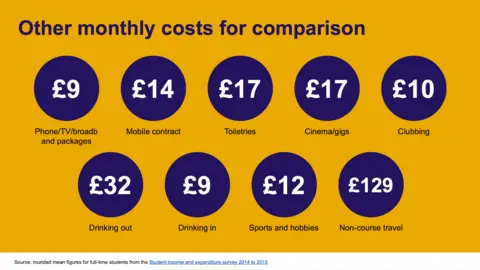
A powerpoint presentation which compared a student loan repayment of £15 to other monthly costs, including £10 for clubbing, was based on a 2014/15 expenditure survey but the presentation was delivered for the academic year of 2020/21.

The Treasury Committee will report back later this year. The Department for Education (Dfe) has been approached for comment.

Academics and activists condemn Birmingham City University's closure of the eight-month old course.

As young graduates criticise the terms of their student debt, Evan Davis asks whether baby boomers really were the luckiest generation

Cranfield and King's College London will merge from August 2027 "to support national resilience".

The Wolverhampton university says its share of the £50m will accelerate innovation.

An Education Select Committee report finds the government needs to make urgent plans for universities facing insolvency.