Press
There’s an app for that: Gaza’s developers use tech to solve war problems
Images
1 / 10
2 / 10
3 / 10
4 / 10

5 / 10

6 / 10

7 / 10

8 / 10

9 / 10

10 / 10
Gaza’s battered tech sector is being reshaped by young developers building practical apps to navigate life.

Save

Share

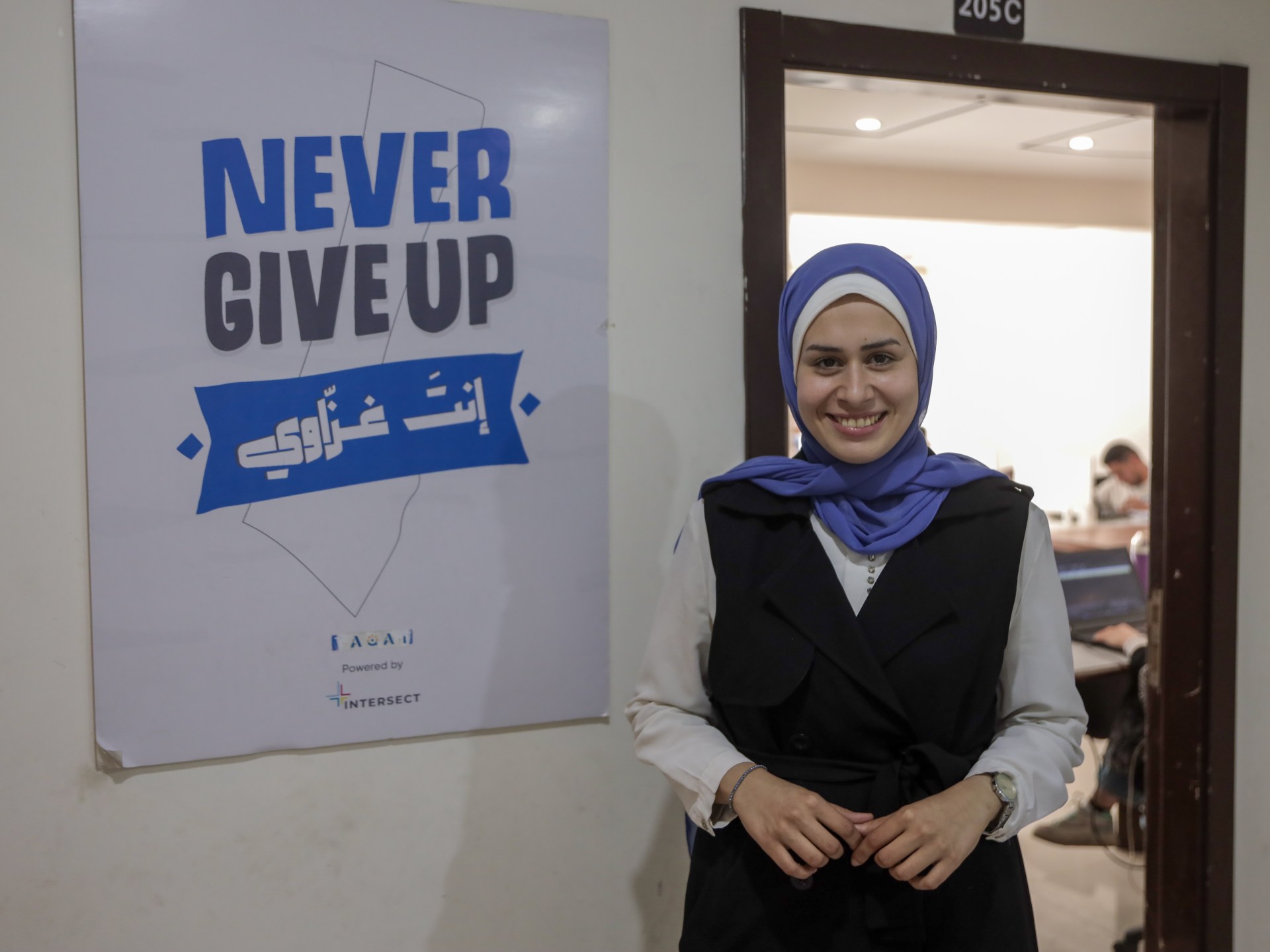
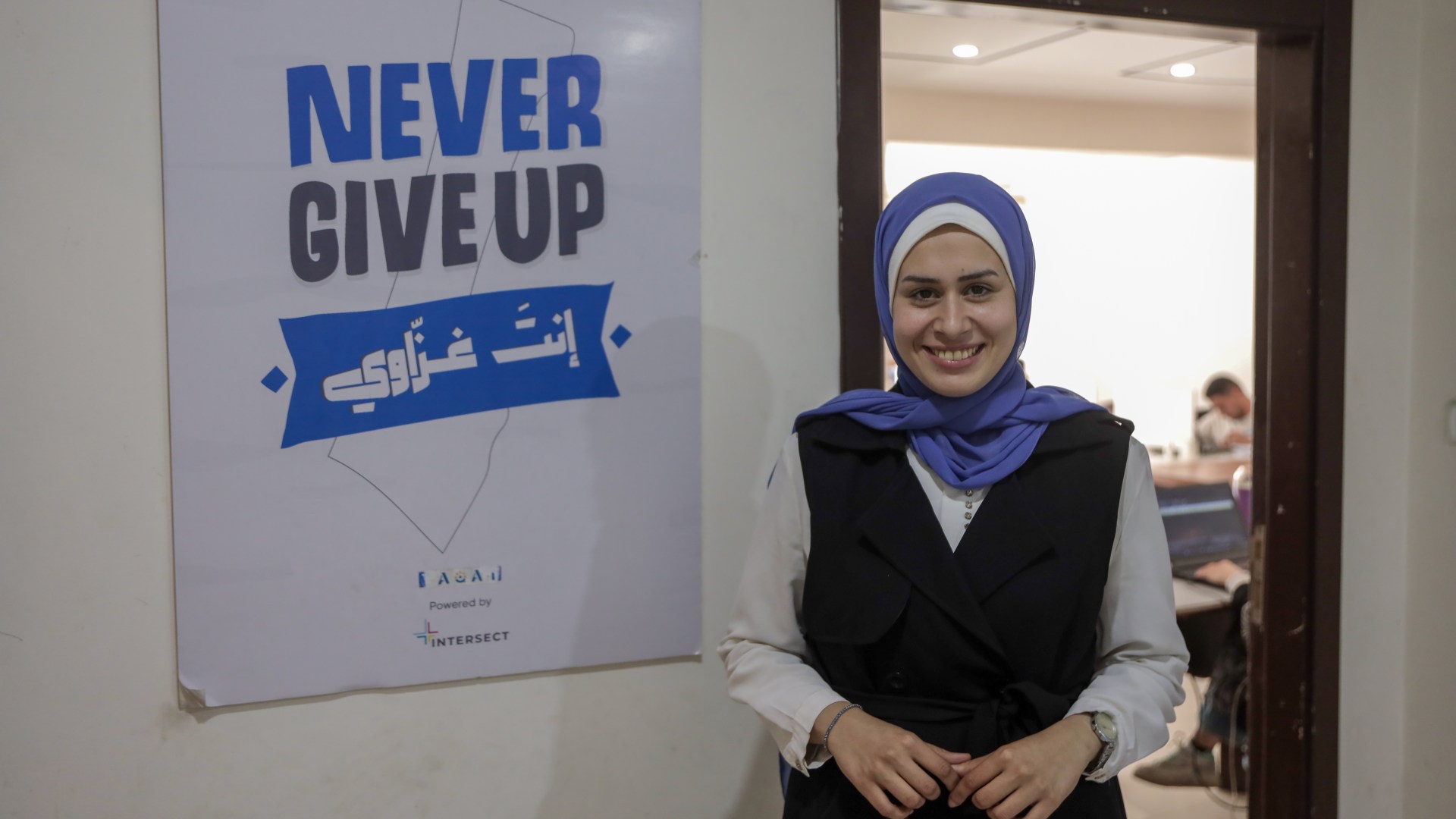
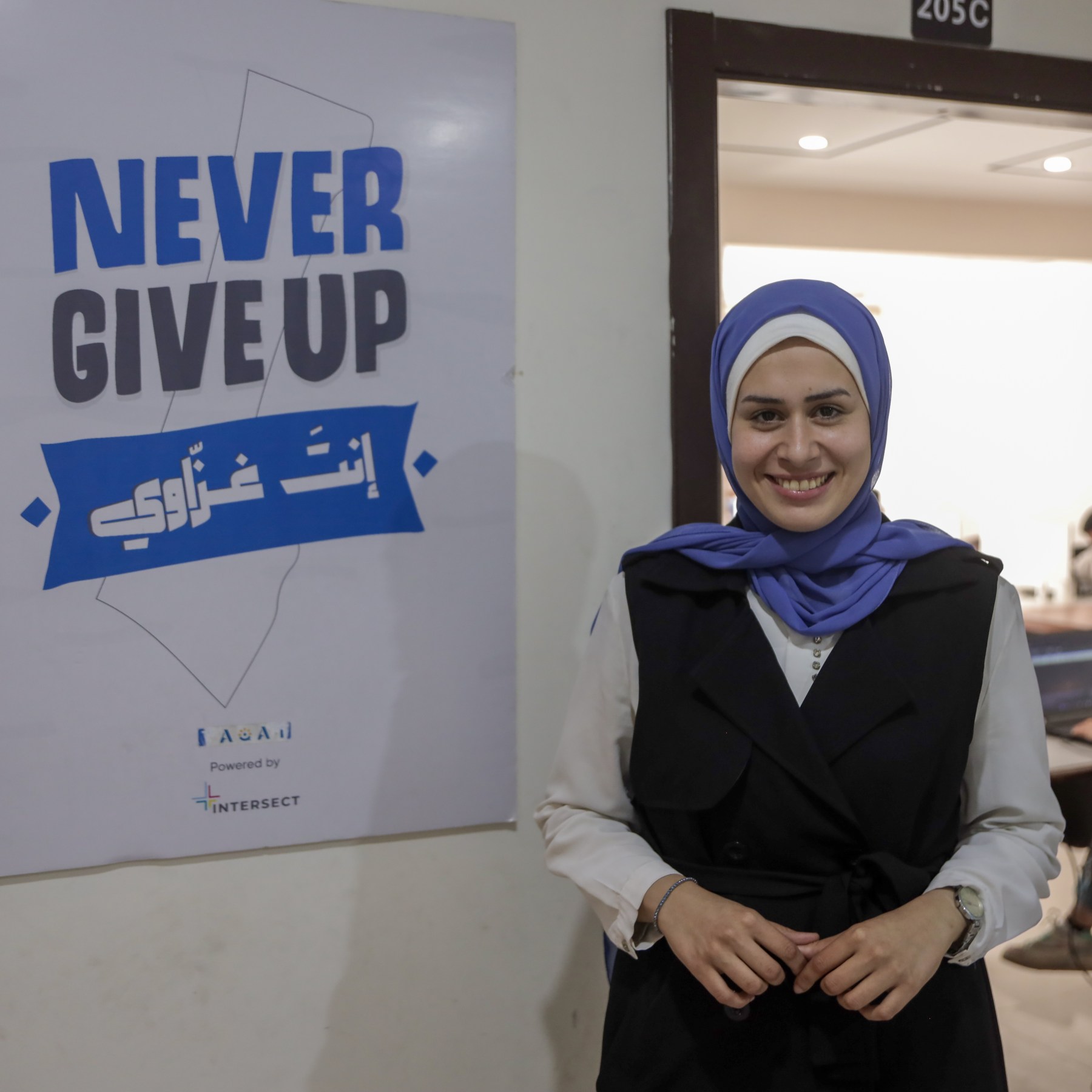
Gaza City, Gaza Strip – In a small corner inside the Taqat Gaza co-working space, Saja al-Ghoul sat working on her latest mobile app idea.

The 23-year-old programmer, like her colleagues working from the space, is focused on developing apps that can help solve some of the difficulties of living in the Palestinian enclave.

Identifying a problem is not difficult; two years of Israel’s genocidal war on Gaza, and a ceasefire that has not stopped attacks, or allowed for proper reconstruction to take place, mean that the enclave is teeming with crises.

Saja’s app is called “Waselni” – Arabic for “help me reach my destination”. She aims to help alleviate the transportation problems Palestinians in Gaza face.

The app allows people to share rides and coordinate trips with one another to reduce transportation costs, which have risen dramatically in recent months. It also includes a prepaid electronic wallet to bypass the worsening cash crisis brought on by the war.

“Anyone can propose a trip, for example, from al-Shifa area to as-Saraya in central Gaza City at 8am, and then other people can join the same ride and split the cost,” Saja explained.

Bahaa al-Mallahi, a 26-year-old information systems graduate, was at the same hackathon as Saja. His app idea focuses on another problem that has become prevalent during the war: the loss of belongings.

“People lost almost everything during displacement,” Bahaa said. “Personal belongings, official papers, phones, bags … Sometimes, things with little financial value but immense importance to their owners.”

Bahaa noticed that recovering lost items had become extremely difficult, and that appeals about missing belongings were flooding social media platforms.

He came up with the idea of creating a dedicated digital platform for lost-and-found items, which he called “Rajja’li” – Arabic for “return it to me”.

“If you find something, you post it on the platform. If you lose something, you search for it there,” Bahaa explained.

But the project did not stop there. Bahaa also began thinking about developing the platform in the future to include missing children cases during displacement or overcrowding – incidents that have become increasingly common in Gaza.

“Every day we see announcements about missing children,” Bahaa said. “Because of life in tents and the breakdown of communication, finding children and reconnecting them with their families is difficult.”

“If a child goes missing in a specific area, an instant notification could be sent to nearby users containing the child’s photo and description,” he said.

In both Saja and Bahaa’s cases, developing the app is only half of the journey. They have both encountered lots of problems, some related to the general challenges app developers face, and some specific to Gaza and the war.

Saja’s app, for example, needs to be widely adopted for it to be useful. If a person opens the app and finds there are few people willing to take the same route at the same time, then they are likely not to try and use it again. Saja acknowledged that she likely needs buy-in and promotion from local authorities to help spread the word and also verify drivers.

Meanwhile, Bahaa said he needs cooperation from official bodies if he wants people to trust his platform to find their missing documents.

The obstacles extend far beyond visibility and adoption. The cost of developing applications itself has become a heavy burden on young programmers in Gaza, especially as many new projects increasingly depend on paid artificial intelligence tools.

“We need AI subscriptions, and these are extremely expensive,” Bahaa said. “Even basic services have become paid, and prices keep rising.”

Bahaa had worked as a network engineer at a local internet company, but lost his job after the war started. He later tried to find remote opportunities with companies outside Gaza, but says it was nearly impossible.

With worsening economic conditions, Bahaa says many talented young people are now trapped by unemployment, constant electricity, and internet outages, and soaring work-related expenses.

“Today, internet and electricity have become luxuries,” he said.

He also pointed to the expensive and exhausting nature of co-working spaces that programmers increasingly rely on.

“You pay hundreds of shekels per month just to have a place with electricity and internet,” he said.

For engineer Sharif Naeem, founder and CEO of the Taqat Gaza co-working space, the initiative was never a conventional entrepreneurial project but rather a direct response to the collapse of Gaza’s tech sector after the war.

“Taqat was fundamentally a response to a real problem facing remote workers in Gaza: the absence of safe places with electricity and internet,” Naeem told Al Jazeera.

At the start of the war, thousands of freelancers and programmers lost the ability to work after infrastructure was destroyed and communications and electricity were cut for extended periods. Many lost jobs or international contracts, while others could no longer even power their devices or attend online meetings.

“Our first goal was very simple: how do we get people back to work?” Naeem said.

He established Taqat Gaza as a small co-working space for remote workers before it gradually expanded during the war into several locations across Gaza, including Nuseirat and Deir el-Balah.

Later, after people returned to northern Gaza in early 2025, the organisation opened its main headquarters in Gaza City, accommodating about 250 freelancers and programmers.

But over time, those behind Taqat Gaza realised that the crisis was no longer just about electricity or workspace. The bigger issue had become the massive technical knowledge gap, which was caused by the war isolating Gaza’s developers from the rapidly evolving global tech world.

“We discovered that the war created a huge knowledge gap,” Naeem said. “The tech world advanced rapidly over the past two years while young people in Gaza were busy trying to survive.”

He added that many programmers returning to work found themselves behind global market demands in terms of skills, tools, and modern technologies, especially amid the accelerating boom in artificial intelligence.

“We began focusing on training programmes that bridge the gap between market needs and the capabilities available among youth here,” he said.

As a result, Taqat evolved from merely a workspace into a training and incubation centre for young programmers and developers through multiple programmes implemented in partnership with universities and local and international institutions.

Within these programmes, dozens of ideas for applications and tech projects began to emerge, all attempting to address daily problems in Gaza, from transportation crises to lost documents during displacement.

Naeem says many of these ideas did not emerge in isolation, but directly from the lived experiences of the young people themselves.

“The youth here are not building fantasy projects,” he said. “They are building solutions for problems they experience every day.”

Still, the road ahead for these projects remains difficult. Alongside weak electricity and internet infrastructure, developers face major financial and technical obstacles, from soaring equipment and software subscription costs to difficulties accessing international markets.

Despite this, Naeem believes Gaza’s tech sector still has the potential to recover if given the right environment and meaningful support.

“We have tremendous human potential,” he said. “The problem is not a lack of talent, but a lack of genuine investment in that talent.”