Press
Trump's 'Golden Dome' to cost $1.2tn, watchdog estimates
Images
1 / 8

2 / 8
3 / 8
4 / 8
5 / 8
6 / 8

7 / 8
8 / 8
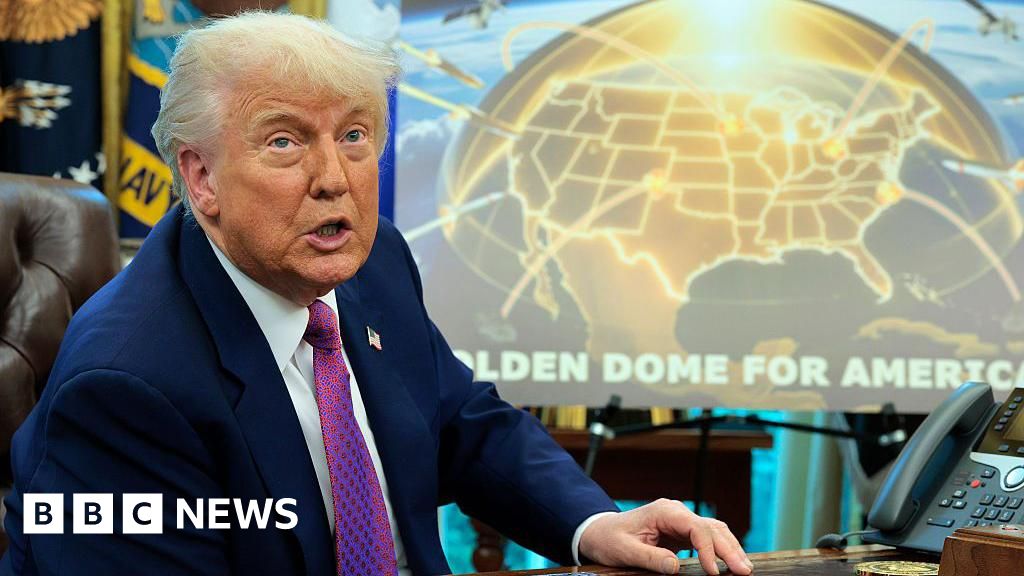
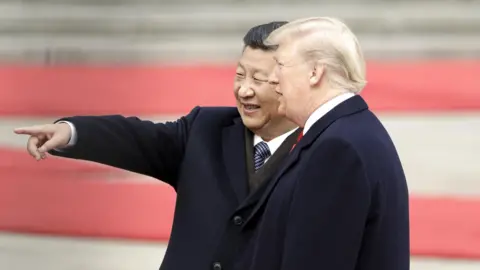
President Donald Trump's futuristic "Golden Dome" missile defence system will cost about $1.2 tn (£882bn) to develop, deploy and operate over two decades, a new report from the nonpartisan Congressional Budget Office estimates. That figure is significantly higher than the initial sum of $175bn (£129.25bn) that had been earmarked. Acquisition costs alone would be over $1tn, including for the interceptor layers and a space-based missile warning and tracking system, the watchdog said in a report published on Tuesday. The "Golden Dome", which aims to encompass the US, is designed to counter aerial threats to the US, including ballistic and cruise missiles. Just days after returning to the White House in January, Trump unveiled his plans for the system, aimed at countering "next-generation" aerial threats. He said last year that the programme would require an initial investment of $25bn, with a total cost of $175bn over time. Democratic Senator Jeff Merkley, who requested the estimate in the report, said on Tuesday: "The President's so-called 'Golden Dome' is nothing more than a massive giveaway to defense contractors paid for entirely by working Americans." The BBC has contacted the White House and the Pentagon for comment. There have been doubts about whether the US will be able to deliver a comprehensive defence system for such a huge land mass. Officials have warned that existing systems have not kept pace with increasingly sophisticated weapons possessed by potential adversaries. The new Congressional Budget Office report warned that the system could be "overwhelmed" by a full-scale attack mounted by Russia or China. An executive order calling for the creation of what was initially termed the "Iron Dome for America" noted that the threat of next-generation weapons has "become more intense and complex" over time, a potentially "catastrophic" scenario for the US. A week into his second term, Trump ordered the defence department to submit plans for a system that would deter and defend against aerial attacks, which the White House said at the time remain "the most catastrophic threat" facing the US. Trump said the system would consist of "next-generation" technologies across land, sea and space, including space-based sensors and interceptors. The system would be "capable even of intercepting missiles launched from the other side of the world, or launched from space", the president said last year. The no-bid contract went to a firm company, which critics say bypassed a rule for competing offers. Beijing is arguably the most powerful competitor the US has confronted in its history, one analyst says. Trump's whirlwind visit to China is the most significant for years - but will it bear fruit? Negotiations have progressed in recent months, according to multiple officials familiar, with the White House optimistic of reaching a deal. A total of 17 US executives are set to join the president on his visit, where he will meet his Chinese counterpart Xi Jinping.