yahoo Press
Microplastics in the sky? Tiny troublemakers may be warming Earth.
Images
1 / 11
2 / 11

3 / 11

4 / 11

5 / 11

6 / 11
7 / 11
8 / 11

9 / 11

10 / 11

11 / 11
Two of our planet's most serious environmental issues ‒ microplastics and global warming ‒ have collided in a new scientific study released May 4.

Microplastics are in our oceans and mountains, our food, and even our bodies. And now, according to the new study, microplastics floating in our atmosphere are actually helping to boost global warming. The research was published in a paper in the peer-reviewed British journal Nature Climate Change.

What's new in the study is the discovery that "the net effect of atmospheric microplastics on climate is to cause additional warming," study coauthor Drew Shindell of Duke University told USA TODAY via e-mail. "From our study we can see that these particles absorb about five times as much sunlight as they reflect, so that in the net they make our planet hotter, which was not clear before."

Previous research has suggested that the contribution of airborne plastics to atmospheric warming was minimal, but such analyses often assumed that they were uncolored despite real-world plastics commonly containing pigments, according to a news release about the study.

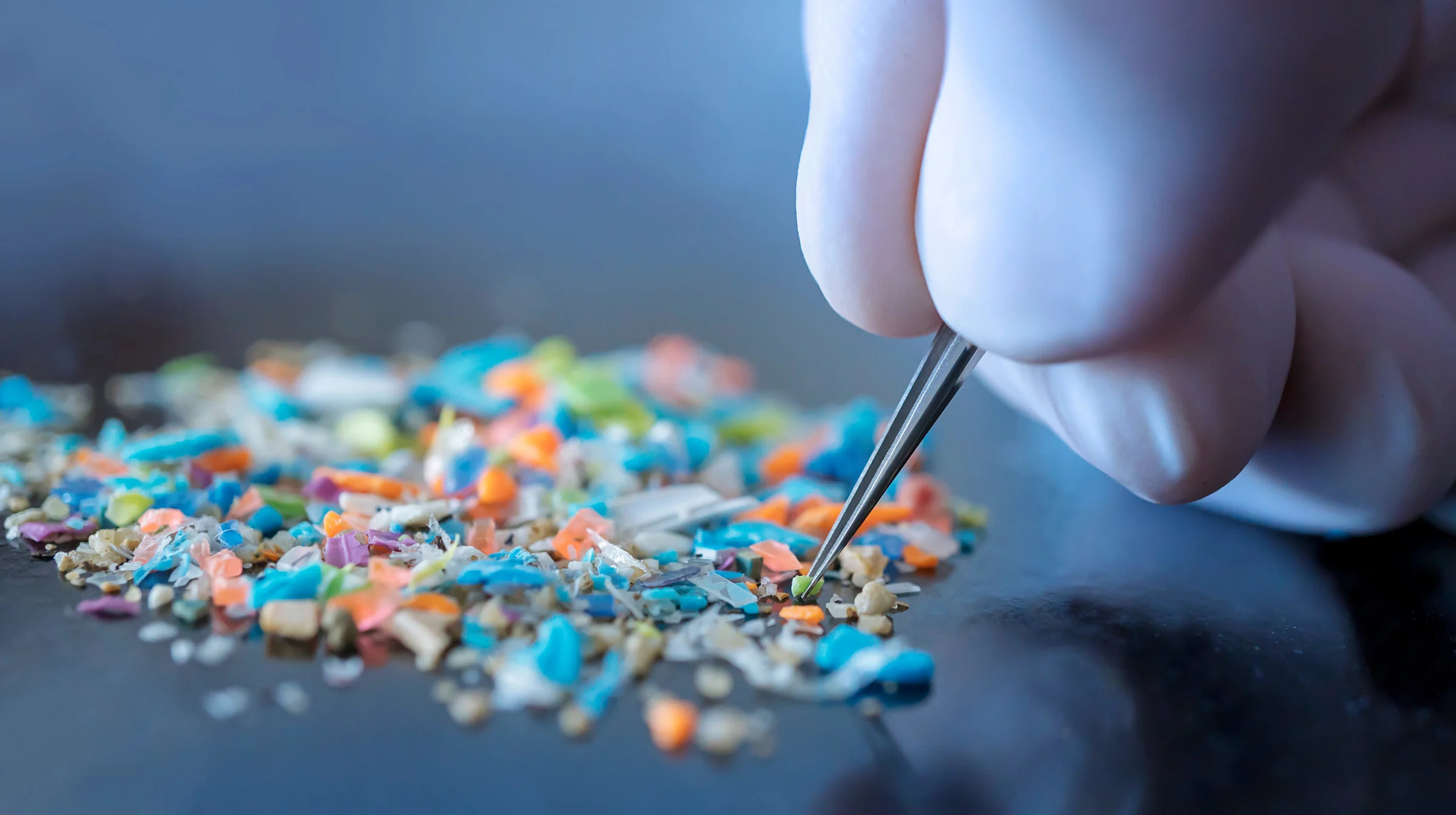
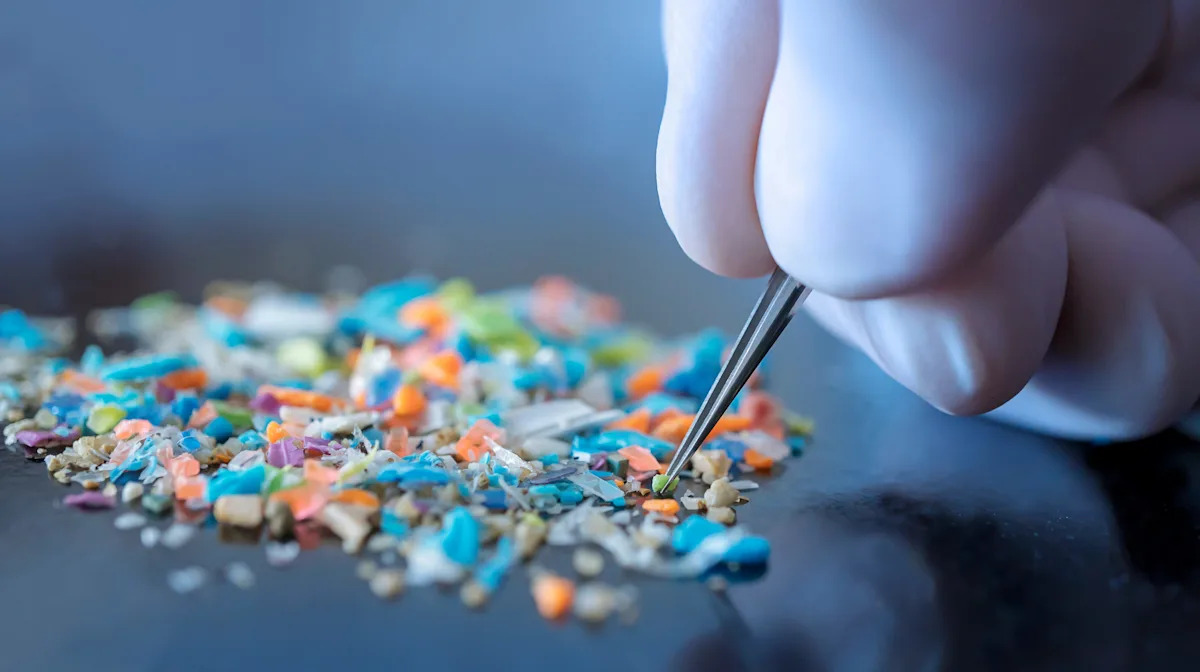
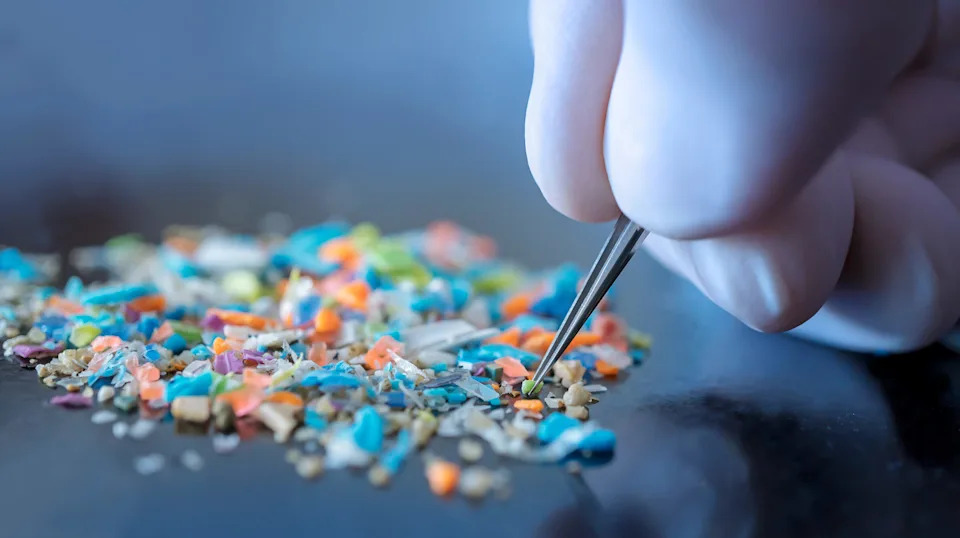
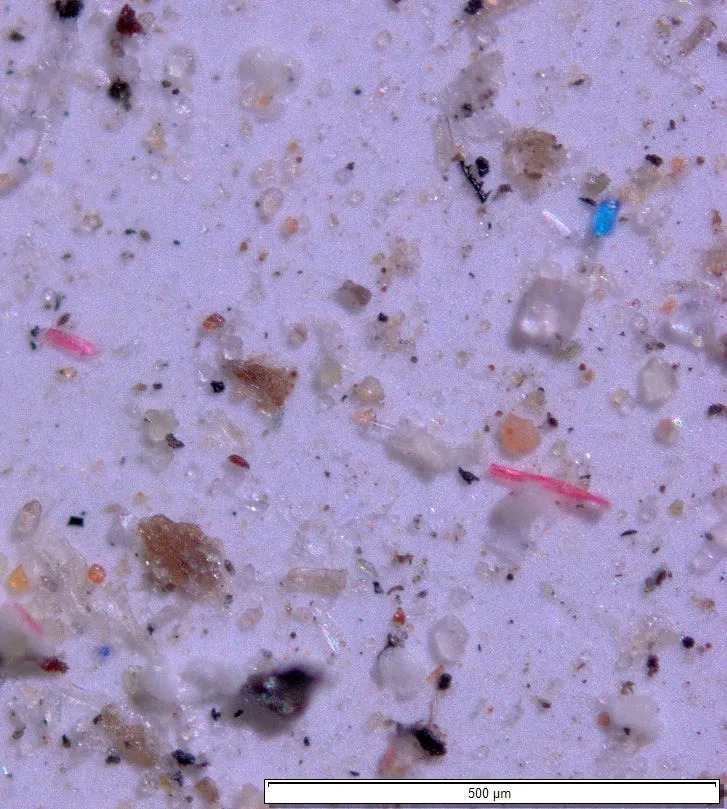
Microplastics are tiny particles of plastic that come from the slow breakdown of larger trash, such as clothing, packaging and car tires. They consist of any type of plastic less than 5 millimeters long and can be as small as 1 millimeter in length.

“Microplastics are in the air we breathe, they’re in our drinking water, they’re in our bodies,” Judith Enck, president of Beyond Plastics, recently told CNN. “If it’s plastic, you’re going to get microplastics sooner or later,” she said.

"These tiny plastic fragments can travel long distances through the atmosphere, carried by wind across continents and oceans," said Gilberto Binda of the University of Insubria in a companion article in Nature Climate Change. Binda went on to say that the plastic's color is an important factor determining the plastic's contribution to global warming.

Microplastics in the atmosphere contribute to global warming by absorbing sunlight, Shindell said. The exact amount of microplastics in the atmosphere "is still quite hard to tell."

"We have limited data on exactly how many of these there are in the atmosphere," Shindell said. "And where they are."

Shindell said previous studies didn’t have much data on optical properties and evaluated climate effects with simple assumptions.

"We’ve both measured the optical properties of a large variety of different-sized and colored plastics, including after they age," Shindell said. For instance, exposure to ultraviolet light caused most of the lighter and clear plastics to yellow and the darker ones to bleach."And we’ve followed that up with the most realistic models to date of their effects on climate once they’re carried by winds around the Earth," he said.

"A fairly small percentage, around 2%," Shindell told USA TODAY. "Fairly small, but regionally can be large. And, to reduce warming, we’re going to need all the options we have available so knowing about this one is useful to add to our efforts to cut warming, even if it’s a relatively minor player."

Carbon dioxide, a greenhouse gas emitted by the burning of fossil fuels such as oil, gas and coal, still contributes to the lion's share of global warming, roughly 50 times more than microplastics, Shindell said.

"No, soot, like microplastics, absorbs sunlight and so has a warming effect on the planet," Shindell said. "Most other aerosols (particles in the atmosphere) are lighter colored and their main effect is to reflect sunlight back out to space, cooling the Earth.

"That’s what happens from sulfur put into the atmosphere by coal burning or volcanoes, but soot is so dark it has the opposite effect."

According to the study, colored micro- and nanoplastics suspended in the atmosphere may contribute to global warming at a level equivalent to 16.2% of that caused by black carbon, aka soot, with higher values seen over oceanic garbage patches.

The color of the plastic really matters: Researchers found that black and colored particles strongly absorb sunlight compared to white particles. Thus, the darker the plastic particle, the more it contributes to global warming.

Binda explained that "by using advanced optical techniques, the researchers measured how different types of colored microplastic and nanoplastic interact with light across the visible spectrum." Then, to understand the broader climate implications, he said the researchers combined their laboratory measurements with atmospheric climate models.

The lead authors of the study are Yu Liu and Hongbo Fu of Fudan University, Shanghai, China.

The findings show that airborne plastic particles, particularly colored nanoplastics, contribute to atmospheric warming and may also influence regional climate patterns.

The authors also note that the laboratory experiments are a simplified version of atmospheric processes and that the global distribution of micro- and nanoplastic particles needs to be better determined by observations.

"Further research is needed to fully determine how micro- and nanoplastics contribute to Earth’s warming and to improve their representation in climate models," according to a news release about the study.

Study authors also recommend that microplastics' role in global warming should be considered in future climate assessments.

This article originally appeared on USA TODAY: Climate change problems worsened by colorful microplastics, study says