Press
Your exam season survival guide - rest, reflect and recall
Images
1 / 11

2 / 11
3 / 11
4 / 11
5 / 11
6 / 11

7 / 11
8 / 11
9 / 11
10 / 11
11 / 11
Exams season is upon us, which means after months of learning, revising and memorising it's nearly crunch time.

But it doesn't have to be a stressful experience.

BBC News spoke to teachers and tutors for their top tips on revising, sitting exams and how to take care of yourself too.

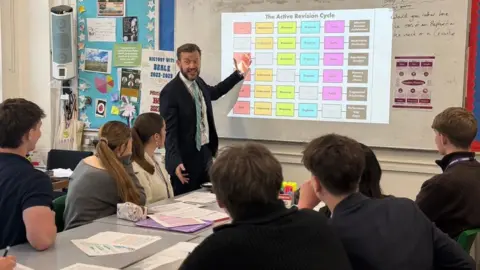
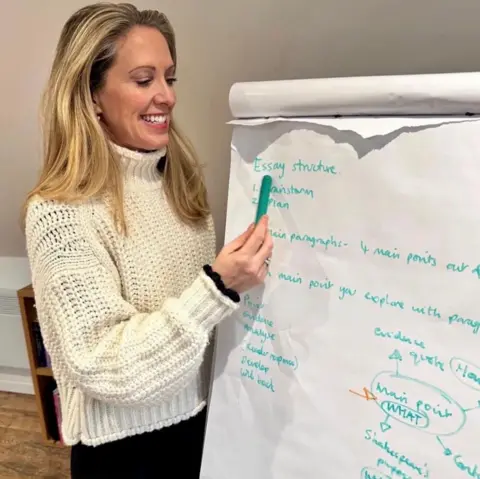
Simon Beale, a secondary school history and politics teacher, says you should try to improve your understanding of topics and commit key terms to memory to prepare for "differently phrased" questions coming up on exam day.

By doing this, Beale says students can ensure every minute of study is "targeted" to where it matters most.

He says there's a big difference between being able to read revision notes or a study guide, and truly understanding the concepts.

"If you cannot explain the causes of the Tudors' rise, or simplify the concept of photosynthesis, you don't understand it yet," he says.

Here are some of his pointers:

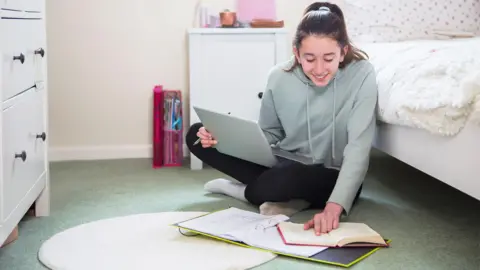
Ruth Havenga, a GCSE English tutor, says AI can be used in an educational way that can support students with revision. But she says it can also be disruptive if not used properly.

To get the most out of using AI in your revision, she says you should:

Havenga says one of the easiest ways to keep organised and prevent exam stress is making sure you know your exam timetable.

She says it's "no good preparing for what's coming in the fourth exam and not what's coming in the first one".

She says you should:

Andrew Bruff, a GSCE English tutor, and Emily Merrison, a GCSE and A-level tutor, say the morning of the exam should be about getting the basics right, not last minute cramming.

These are their top tips for making sure you're focused on yourself, as well as your exams:

Relax, it's done! Once the exam is over there is nothing you can change about it, Bruff says, and replaying it will only drain you.

Merrison says you should try to avoid comparing answers with friends, as "your answers are never going to be identical and it doesn't mean you've got it wrong".

They say after the exam is done:

While exams are important, Bruff stresses that "no grade is worth your wellbeing".

Havenga and Merrison point out there is the option of retaking the test if needed.

Merrison adds: "There are so many other ways into careers - even if it doesn't go how you thought it would."

Unions warn teachers will quit and there are fears for pupils' wellbeing as classroom tests increase.

The pilot aims to reduce some barriers students in Devon and Cornwall face accessing key exams.

The government says assessments are "vital tools" for identifying areas where pupils need extra support.

Pupils will sit the new online tests in P4 and P7 of primary school and year 10 of post-primary school.

Romanian is the most widely spoken foreign first language in London with 159,000 speakers.