yahoo Press
These 3 places are way 'overdue' for a direct hit from a hurricane
Images
1 / 13
2 / 13

3 / 13

4 / 13

5 / 13

6 / 13
7 / 13
8 / 13
9 / 13
10 / 13

11 / 13

12 / 13

13 / 13
After more than 100 years, is 2026 the year that Tampa gets a direct hit from a hurricane? How about Miami, 34 years since Andrew hit? Or could it be southern New England's turn for the first time in decades?

While none of these questions can be answered now, experts say these three locations are all among the nation's most "overdue" locations for a direct hit from a hurricane.

AccuWeather forecasts have highlighted the unusual "hurricane hiatus" in those three locations, and research compiled by Michael Ferragamo, a freelance hurricane researcher and soon-to-be graduate of the University of Oklahoma, shows those locations haven't had a hurricane in an unusually long time.

"In all of these regions, populations have grown substantially since the last major impacts," AccuWeather hurricane expert Alex DaSilva told USA TODAY. "Many residents have never experienced a hurricane and may not be familiar with evacuation zones or proper preparation, which increases the risk."

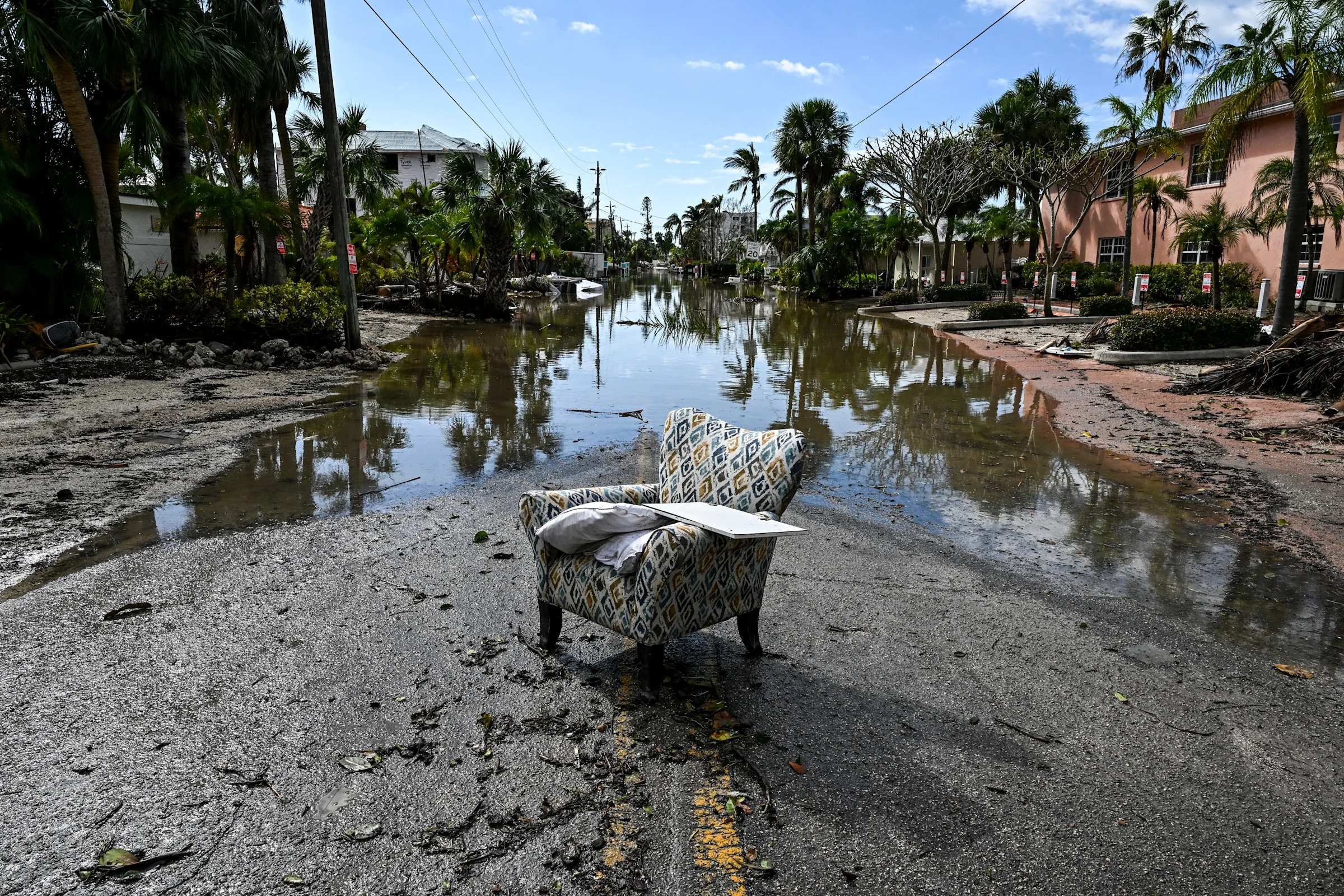
In Florida, both Tampa and Miami are "very vulnerable," DaSilva said. "Both are low-lying and highly prone to storm surge flooding, and both have seen rapid development in recent decades. Tampa was very fortunate when Hurricane Milton passed just to the south. If that track had shifted slightly north, the impacts could have been catastrophic."

In the Northeast, areas from New York City through Providence, Rhode Island, are also highly susceptible to storm surge.

Florida's second-most populous metro area (behind Miami) hasn't taken a direct hit since 1921, when an unnamed storm slammed into the city, killing eight people and leaving behind $10 million (equivalent to $170 million to $185 million today) in damages.

Hurricane Milton in 2024 was a very close call for Tampa. However, "Tampa's remarkable streak of avoiding a direct hit from a major hurricane continued with Milton," DaSilva said.

While Milton brought impacts, the worst of the storm — and the storm surge — missed the city. DaSilva said there's no geographical or topographical reason — or even a meteorological reason — for Tampa's long streak. "They got very, very lucky," he said.

"The typical 'return interval' there is around 10 years, so depending on how you classify Milton, Tampa could still be considered overdue for a more direct and severe hit." (A return interval, or return period, is the average amount of time between hurricanes at a specific location, based on historical data — not a schedule or prediction.)

Colorado State University hurricane researcher Phil Klotzbach agreed with DaSilva: "Tampa is another good example of a city with several close calls but no direct landfalls in recent years," citing Hurricanes Charley (2004), Irma (2017), and Idalia (2023).

"Miami and the entire east coast of Florida has been eerily quiet since 2004," Klotzbach said. "The only hurricane landfall along the Florida east coast since Jeanne in 2004 was that sprawly mess Nicole in 2022. Of course, Miami had quite the scare from Irma in 2017," he said.

DaSilva said "Miami is one of the most overdue areas. The average return interval for a hurricane there is about every 6 to 8 years, yet it has been since 2005 since a direct hit. That puts South Florida well beyond its historical frequency."

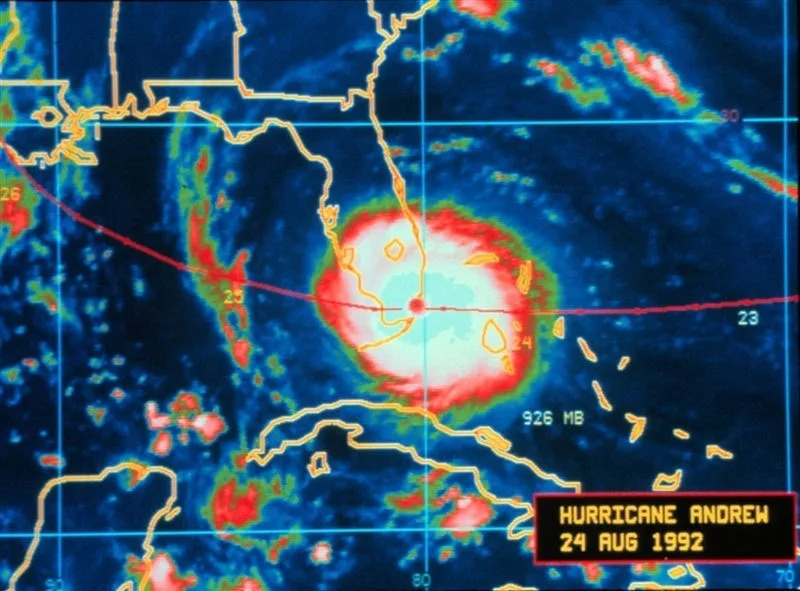
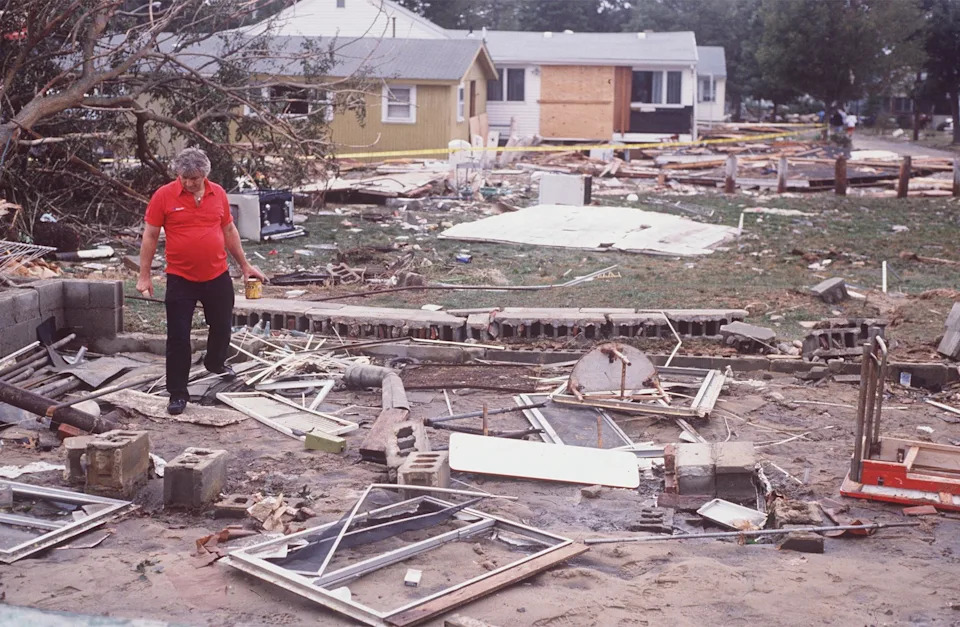
1992's Hurricane Andrew remains South Florida's worst storm on record in terms of structures damaged or destroyed, and remained the costliest in monetary terms until Hurricane Irma topped it 25 years later.

Ferragamo also said that Florida's east coast has had very few hurricane landfalls recently, "which is quite the contrast from the seven hurricanes that struck between 1945 and 1950!"

Southern New England, including Providence, is also significantly overdue, DaSilva said. "The typical return interval is about 17 to 20 years, but the last direct hurricane landfall there was Hurricane Bob in 1991. That is more than three decades ago."

A former resident of Massachusetts, Klotzbach said "I can attest that it's been a long time since a significant hurricane impacted that region."

While Bob brought destruction, the scale and severity of the death and devastation from the ferocious hurricane of 1938 remains mostly unmatched in New England.

The 1938 hurricane killed as many as 682 people and hit as a Category 3, with winds of 115 to 120 mph. In addition, it moved at nearly 50 mph, leaving little warning and producing catastrophic surge and wind across Connecticut, Rhode Island, and Massachusetts.

DaSilva said that "Last summer, our team highlighted how the Northeast is overdue for a hurricane and ran a scenario. If the Great New England Hurricane of 1938 hit the same region with the same storm surge, flooding and wind impacts now, AccuWeather experts estimate the total damage and economic loss would be $440 billion."

More recently, the last landfalling hurricane was Bob in 1991, Ferragamo said. "Since then, kids have grown up and are in their 20s & 30s in the region, and still haven't experienced a hurricane strike."

"My biggest concern for New England comes in the form of major hurricanes — the once in a lifetime monsters, like in 1938 or Carol in 1954. Residents have absolutely no idea how bad a hurricane can be in the region, and when another one does hit, it will be catastrophic, even if it's a Category 2."

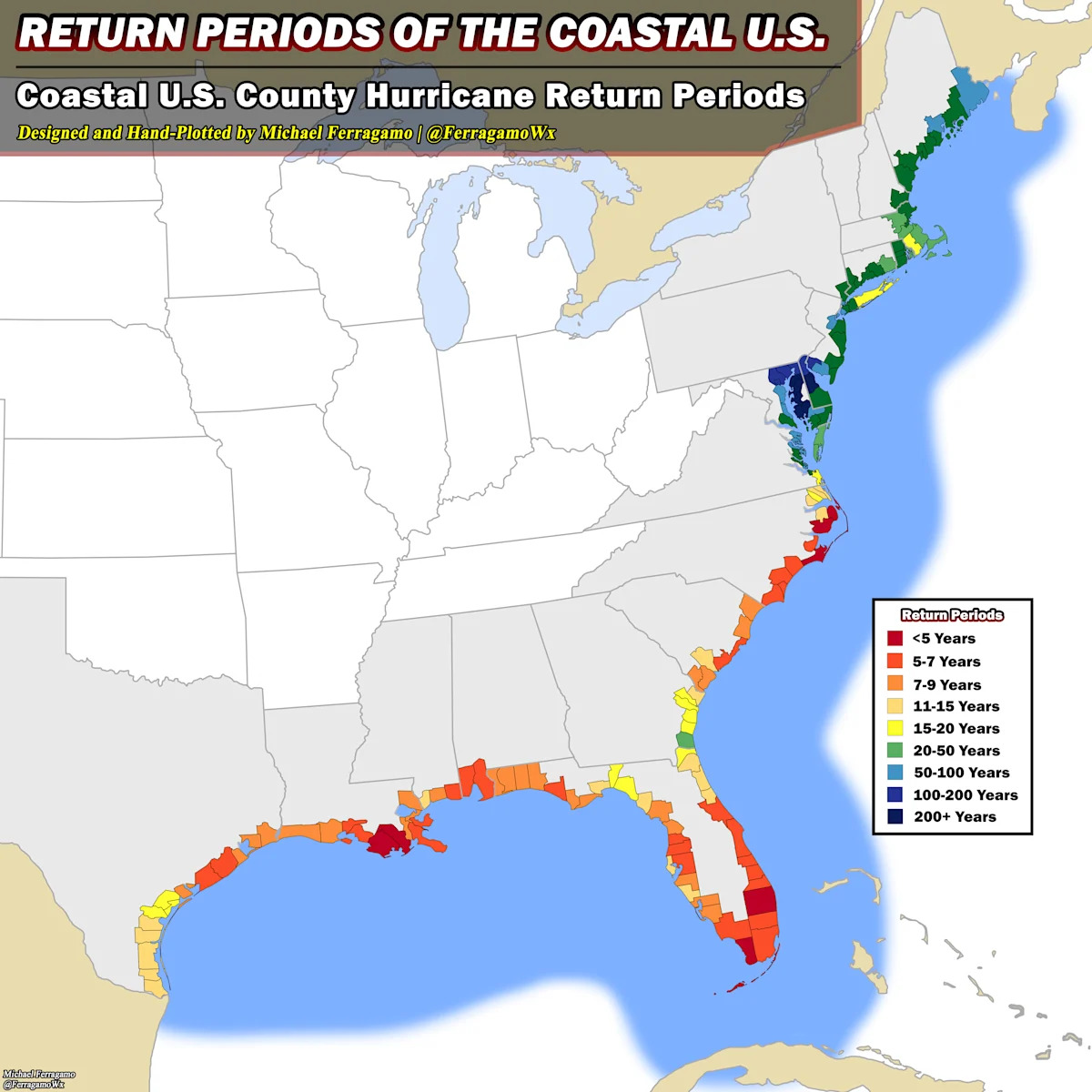
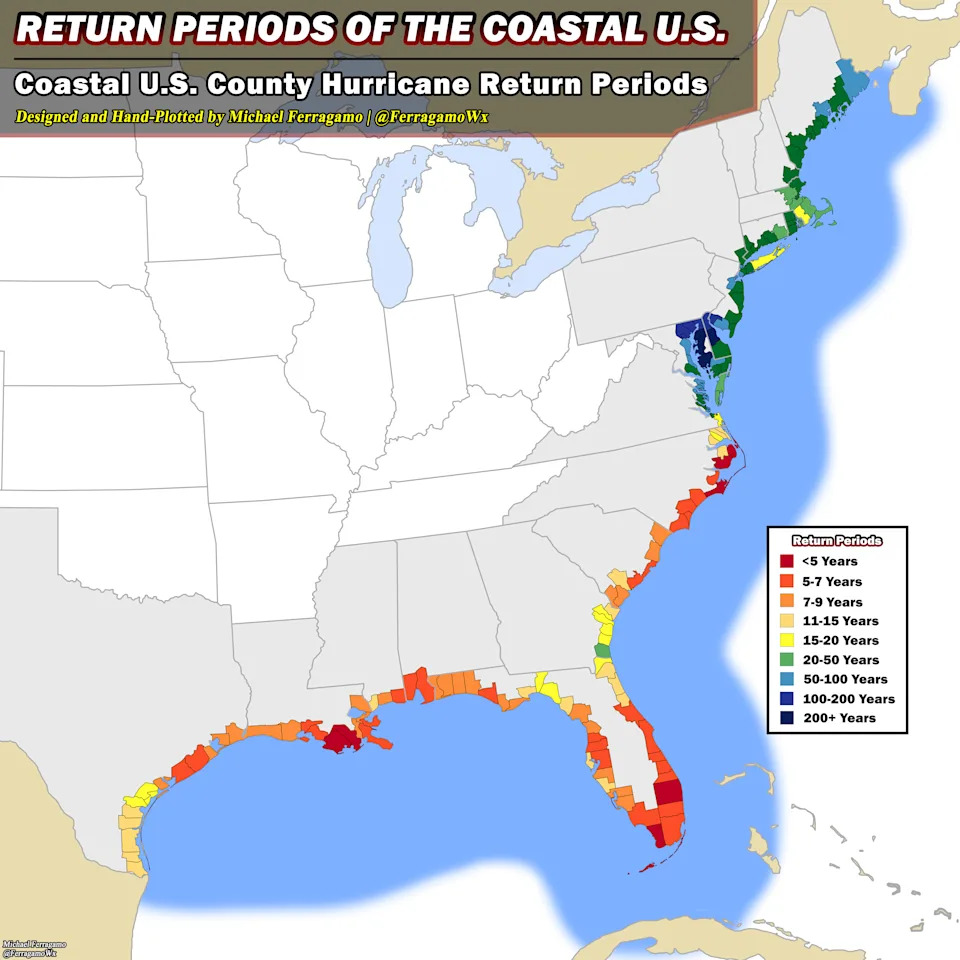
The map (above) displays the hurricane "return periods" of the entire coastal United States. A return period, also known as a "return interval," is the amount of time between hurricanes at a specific location. It is based on historical data, and is not a schedule or a prediction.

The more frequent the return period (red on the map), the more often hurricanes historically hit that area.

The map was for Ferragamo's capstone project in his last semester at the University of Oklahoma. "For the return period map, I implemented a 30-mile radius around counties (to account for the average diameter of hurricane-force winds in a storm)."

Doyle Rice is a national correspondent for USA TODAY, with a focus on weather and climate.

This article originally appeared on USA TODAY: Worst cities for hurricanes? Map shows risk; some places 'overdue'