buzzfeed Press
Ex-Priests And Nuns Revealed Why They Left Their Positions, And It's So Fascinating
Images
1 / 14
2 / 14

3 / 14
4 / 14
5 / 14
6 / 14
7 / 14
8 / 14
9 / 14

10 / 14
11 / 14
12 / 14
13 / 14
14 / 14
“I had to choose between the church and being gay. I chose being gay.”

I'm an Associate Editor on BuzzFeed's Pop Culture team who spends my days fangirling over all my favorite TV shows and movies.

Some submissions are also from this thread.

Stories deal with topics like grooming, sexual abuse, suicidal ideation, and eating disorders.

"Classes were alright, but really easy for me. Our professors ranged from alright to absolutely terrible. Some of the classes basically just turned into 'Catholic Ideology 101'. I never got a degree because I dropped out of college in my third year and left seminary before I could complete the requirements for my philosophy degree.

We were definitely persuaded to think a certain way, and the seminary's sheltered environment made dissonance very difficult. I had a personal inquisition that followed me around and took note of just about everything I did. They demanded my expulsion multiple times.

My spiritual director (one of the few priests I genuinely loved) convinced me to stay longer, but I left a little after winter break. A priest I despised was given a position at the seminary and decided to try to make my life a living hell. He kept urging the ultra-conservative seminarians to 'fraternally correct' me every time I made a 'theological error stemming from pride', because I think modern theology is more important than ancient or medieval theology."

"I decided to enter seminary in my senior year of high school. The 1984 aspect of it shattered me. Always being watched. Eventually, I couldn’t take it anymore and left, with the intention to join the Servites. One day I realized I was gay, and had to choose between the church and being gay. I chose being gay.

I’m now madly in love with another man. Religiously, I say I’m a deist with interest in Norse mythology."

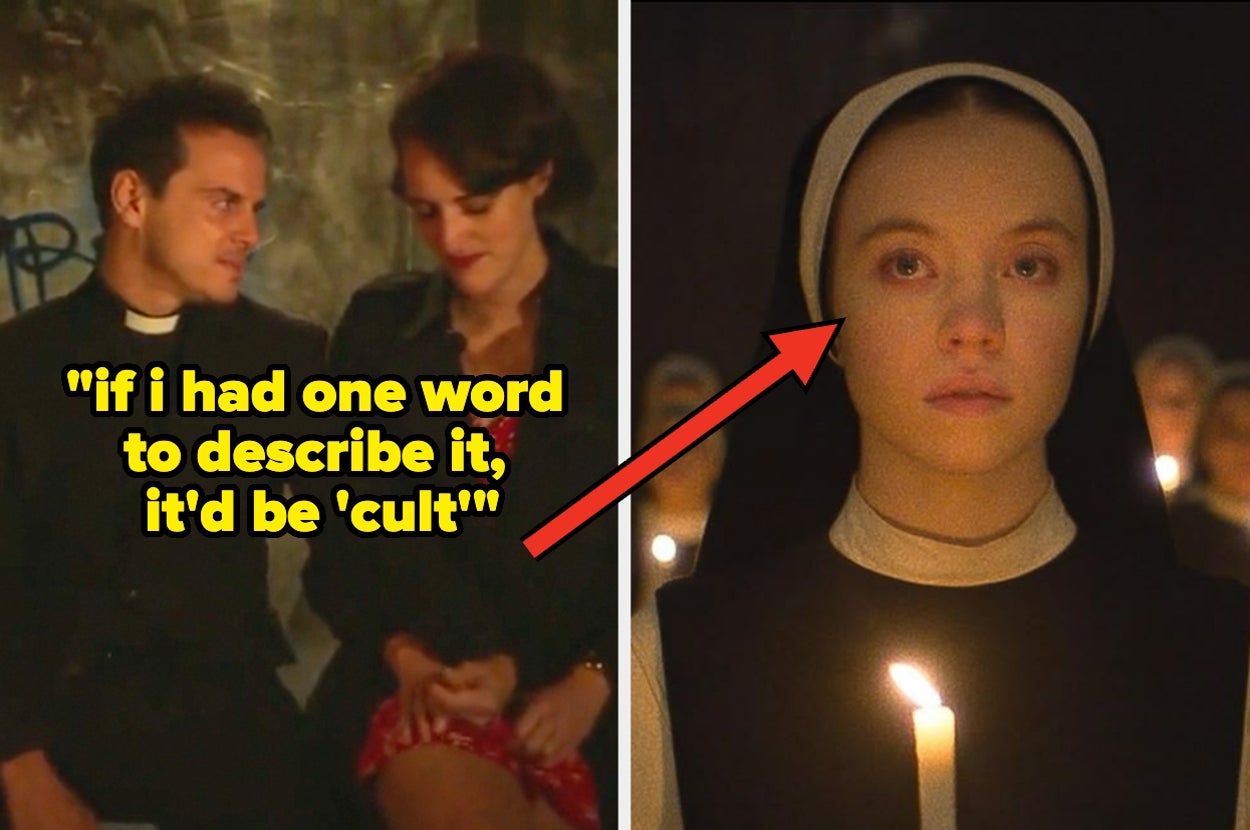
"The seminary I attended was on a college campus and was just like a dorm dedicated to seminarians. Looking back, if there was one word I'd use to describe the seminary, it would be cult. The priests who were involved in formation were treated like superstars and as if they had supernatural abilities, too. The rector was the most charismatic of all and did a great job of making someone feel important and feel like they belonged. A great skill if done under the right context.

At the seminary, I studied philosophy and had to take Latin, both of which I found to be incredibly challenging. The philosophy courses were taught through a Catholic lens, and thinking back, it was just another form of brainwashing. There really wasn't open thought and dialogue, as you just agreed with what they said. Anyone who took a more secular point of view would be looked at as if they had grown a second head. It was just a taboo thing to do.

I left after the spring semester, but the rest of my time there I was just shell shocked as the details of my sister's story came to light. It eventually came out that a very close family friend and an informal spiritual leader (not a priest) was sexually molesting her since the age of 4. No one in my family had any idea. It shook my family and the entire community to their cores. Half of the community supported my family, while the other half supported the predator, as they thought he acted so piously and holily, so there was no way he would do it.

Tensions became higher at the seminary as I became more defiant and openly asked harder questions, as I was really beginning to lose my faith. I was told this was a test from God and would only give me what I could handle, but I wasn't buying it. I left the seminary after that year and finished up at a state school. My journey from the faith was slow, as I then studied Psychology from a secular lens and, funny enough, quickly had many of the questions I was seeking answered.

I'm very happy with my life, though, as I met my wife in this new city and had the opportunity to completely reinvent myself and start over. My wife has been my rock and has been steady through the swings I go through. She had taught me to think critically, to pick up on uncomfortable feelings, and to communicate effectively. These were things I was unable to do because of feeling crushed. I was bitter and angry for a very long time, and I still have moments when I slip into it, but ultimately, I've reflected on this for so many years, and it's given me deeper insight into the universe and reality."

"I wish I could tell you all the stuff that comes from being on the inside and living/working with priests who have had very poor psycho-sexual development and other issues. In the end, it all just got to be too much for me.

As the years went by, most of my peers dropped out, fell in love, or just went nuts. Frankly, I had no intimate friends and no one on the inside to spend time with. I was witness to the troubles of my mentors and teachers as the older priests were less and less able to hide their issues and secrets. I would look around and be unable to point to an older priest that seemed to be truly healthy, holy, and happy. The sanest and healthiest people in my life were outside the church...so that is where gravity took me."

"That pressure, combined with the kind of piety and religious seriousness that was just part of the air I breathed there, led pretty inexorably to applying to seminary pretty soon after graduation. When I got to seminary, I was disgusted by how 'liberal' the one I was attending seemed to be. That perception was amplified by the fact that there was a very active culture of gay men who were predatory and did a lot of grooming of younger men. I was the victim of some of their predatory behavior, not as bad as some have experienced, but still left me feeling violated and powerless, especially since the seminary refused to even address it.

In retrospect, I realize that was probably mostly because those guys' psychosexual development had been stunted because they had to repress their sexuality (almost all of them were sent to study in the US, where the only excuse for being a single man in your 20s was to be a priest).

I struggled with the ideological angst, as well as the sexual misbehavior, and the growing awareness of the church's hyper obsession with money and fundraising. My friends there called it 'Jesus Inc.' On top of that, they are very effective at making you think that nothing the seminary or the church does is really that bad, and no matter how dysfunctional it is, it shouldn't be an obstacle for you. They teach you that basically, if only you were holier and more committed to your vocation, none of that would really be a problem, so ultimately, if you're unhappy, it's really your fault.

I finally reached a breaking point about six months before ordination, and I couldn't deny the reality anymore that I knew I was going to be extremely unhappy in that life. And that even if I went forward, I would inevitably leave it one day because I couldn't take it anymore. Sexuality was one of the very significant pieces of it. Not happening to have sex or get married because of chance or circumstances or whatever is one thing, but deliberately choosing to cut yourself off from the possibility is just different psychologically, I can't really explain how, but it just is.

The other thing was realizing that I would never really have anything of my own or be able to determine my own life. I'd always be living in someone else's house, if that makes any sense. That really bothered me in the sense that I just felt like I would never really get to be an adult. I just realized I didn't want to do it, and I had spent years being gaslit and convincing myself that I really wanted it.

After I left, I was still pretty devout, basically until Trump happened. I watched as the people I thought believed in the gospel used it for political expedience. This led to more and more questioning and realizing that the church is really just another exercise of raw power made by men. Basically, I felt like I'd been duped all those years into genuinely believing doctrines that the church itself doesn't even believe when it's not convenient."

"As far as I know, we're all still in the Church and still friends. We've had a few little reunions in the past year and a half since we've been out. One of our group is getting married this summer, and we're all going to the wedding with a few of us acting as bridesmaids. So, we're all still pretty close.

I will say the experience definitely damaged my view of religious life, even though I'm still an extremely active Catholic. I'm always very quick to tell young women, especially, to be very careful about the community they enter. There are abusive communities out there, and people need to be careful. You're very vulnerable when you enter a religious community, especially if you're young."

"I left with extreme suicidal ideation, and honestly, I still can’t go to mass without feeling immensely angry at God for bringing me into existence. I don’t not believe in Catholicism, but I don’t think any amount of therapy will bring me to the point of having any warm and fuzzy feelings about the whole thing. I do what’s required of me to be a Catholic in good standing, but I’m miserable in my faith.

The problem with religious life is that you are incessantly taught that the voice of God comes through your superior. Unfortunately, if your superior treats you terribly….well, you can fill in the blanks. Humans are fallible, but the Church allows religious sisters to get away with a lot, and I have a hard time being at peace with that. If religious life is an eschatological sign, then I am horrified at the prospect of heaven. The only softening within myself that I can find towards religious life is realizing that the sisters who treated me the worst were victims themselves.

I truly can’t think of anything more detrimental to my faith than my time spent in the convent, and based on the experiences of other women who have left, I could not recommend the lifestyle.

Connecting with other women who have left religious life has been a gift. It’s the worst club full of the best people. Our experiences are all different, but ultimately are just variations of the same unhealthy theme."

"There was a time when you could expect to be isolated and tyrannized during religious formation — a time when all friendship among nuns was considered dangerous and immoral; a time when even your health and safety was second to the Superior's sense of what should be. That mindset is more common today than most of us realize.

Hopefully, we can push through to a new era where convents are places of peace, justice, and brotherly love."

Responses have been edited for length/clarity.