Press
Challenge over Met Police's use of live facial recognition lost
Images
1 / 9

2 / 9
3 / 9
4 / 9

5 / 9
6 / 9
7 / 9
8 / 9
9 / 9
Privacy campaigners have lost a High Court challenge aimed at limiting the Metropolitan Police's use of live facial recognition technology.

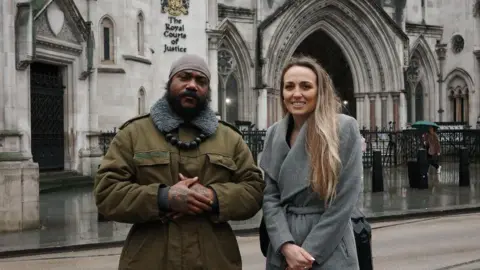
Youth worker Shaun Thompson, and Silkie Carlo, director of campaign group Big Brother Watch, brought the challenge over concerns that facial recognition could be used arbitrarily or in a discriminatory way.

In a major victory for the continued roll-out of the technology, the High Court rejected claims that the Met Police had broken human rights and privacy law by scanning faces in public.

The force will continue to use the technology, with commissioner Sir Mark Rowley calling the ruling an "important victory for public safety".

Shaun Thompson has said he intends to appeal the decision.

Policing Minister Sarah Jones said: "I welcome today's ruling because there can be no true liberty when people live in fear of crime in their communities."

She added that facial recognition technology would be rolled out across the country with "record investment".

Law-abiding citizens have "nothing to fear" as the technology "only locates specifically wanted people", Jones said.

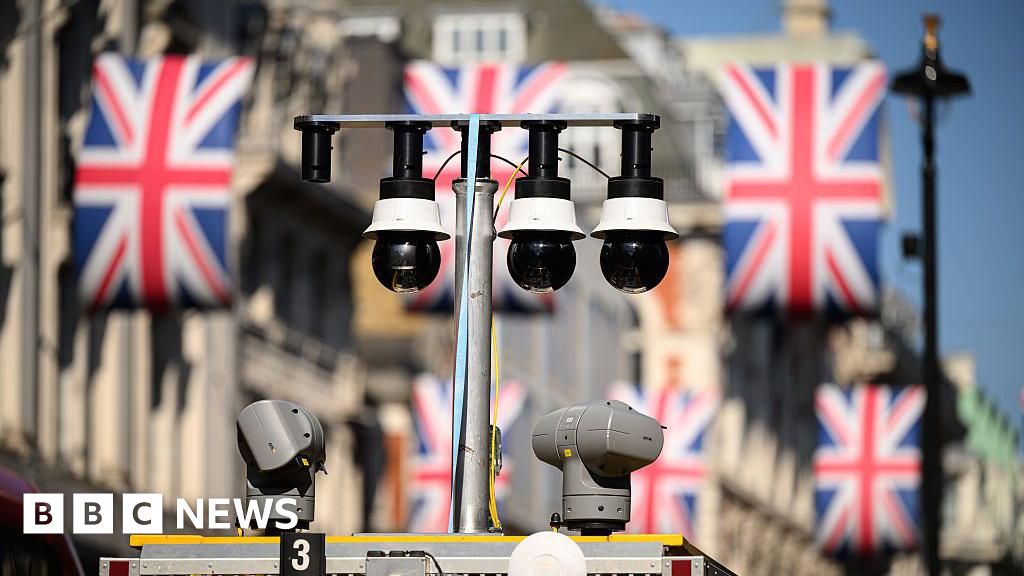
Scotland Yard deploys identifiable live facial recognition vans to selected locations around the capital.

Once set up - and marked with signage - the cameras are turned on and scan people walking through the chosen area, such as a busy high street. The images are instantly compared to a database of wanted criminals or missing people.

If a face does not match anyone on the database, the system deletes the image instantly.

If it finds a possible match, it alerts officers who then double-check the hit before deciding whether to stop the individual.

One of the claimants, Thompson, was misidentified by live facial recognition technology.

In February 2024, he was stopped, detained and questioned by police in London after being matched by the technology with his brother, who, at the time, was on bail for a suspected violent offence.

Thompson said the experience was "shocking and unfair".

In their challenge, Thompson and Carlo argued that the use of the technology breaches the right to privacy outlined in the European Convention of Human Rights.

They argued that the rights to freedom of expression and freedom of assembly are also being breached, claiming that the "excessively broad" discretion afforded to officers had a "chilling effect" on the ability to protest.

Lawyers argued that the plans to mount permanent installations in the capital would make it "impossible" for Londoners to travel without their biometric data being taken and processed.

The team taking the challenge against live facial recognition had raised concerns that the technology would be deployed disproportionally "in areas of London which are lived in by ethnic minority communities".

Lord Justice Holgate and Mrs Justice Farbey said in the 74-page ruling that the "risk and potential scope for discrimination on grounds of race was no more than faintly asserted".

The judgment also stated that Thompson and Carlo's human rights had not been breached.

Met Police commissioner, Sir Mark Rowley, said the High Court ruling was a "significant and important victory for public safety".

He added: "The courts have confirmed our approach is lawful. The public supports its use. It works. And it helps us keep Londoners safe.

"The question is no longer whether we should use live facial recognition, it's why we would choose not to."

In response to the ruling, Thompson said: "No one should be treated like a criminal due to a computer error.

"I was compliant with the police but my bank cards and passport weren't enough to convince the police the facial recognition tech was wrong.

"It's like stop and search on steroids. It's clear the more widely this is used, the more innocent people like me risk being criminalised."

Plans set out by the Home Office in January will increase the number of vans from 10 to 50 and make them available to all forces across England and Wales.

According to the Met Police, 2,100 arrests have been made since the start of 2024 using the technology.

Last year, more than three million faces walked past the live facial recognition cameras and 12 false alerts were logged, with none leading to an arrest.

Listen to the best of BBC Radio London on Sounds and follow BBC London on Facebook, X and Instagram. Send your story ideas to hello.bbclondon@bbc.co.uk

Gabrielle Carrington is accused of causing grievous bodily harm to two people who were hit by a car.

Accelerant was thrown through the window of Kenton United Synagogue on Saturday night.

Sheffield-based PM Law Ltd, which had 25 offices across England, closed suddenly on 2 February.

Police made the arrests over an alleged plot to commit an arson attack on Jewish sites.

Michelle Sadio had been at a wake when shots were fired from a car at mourners in north-west London.