yahoo Press
New cancer cluster feared in N.J. neighborhood. Locals worry they've been poisoned for decades.
Images
1 / 10
2 / 10

3 / 10

4 / 10

5 / 10

6 / 10
7 / 10

8 / 10

9 / 10

10 / 10
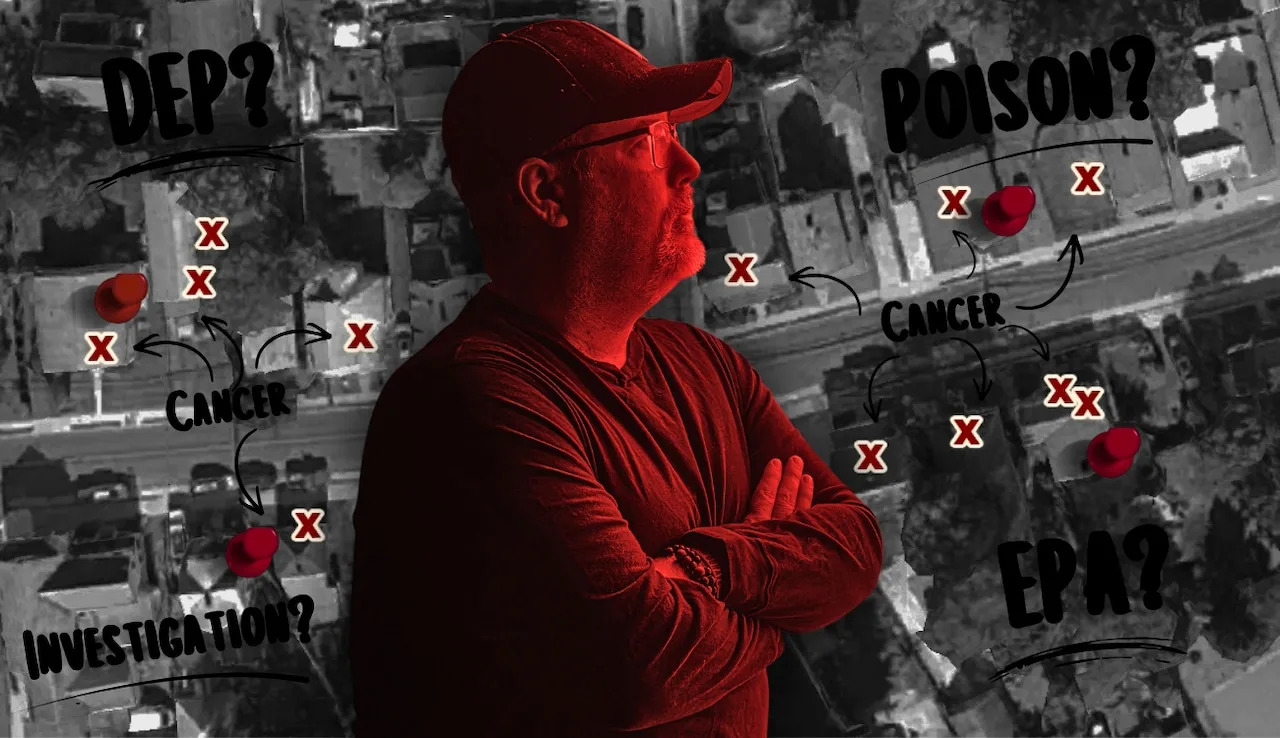
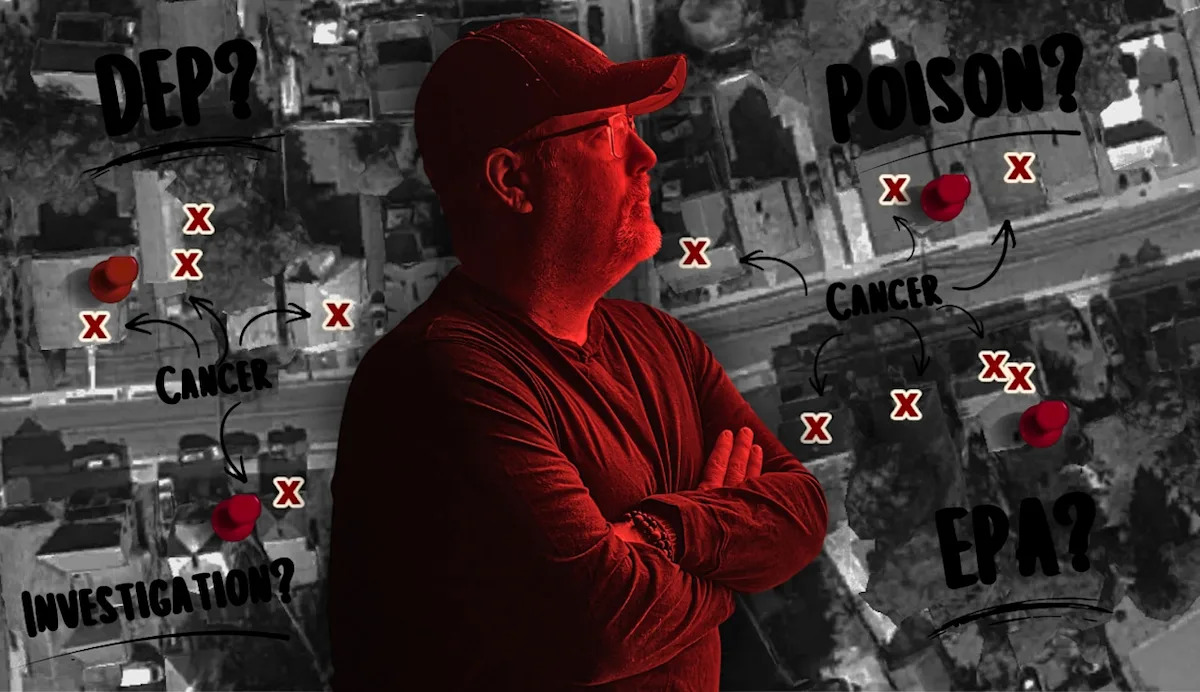
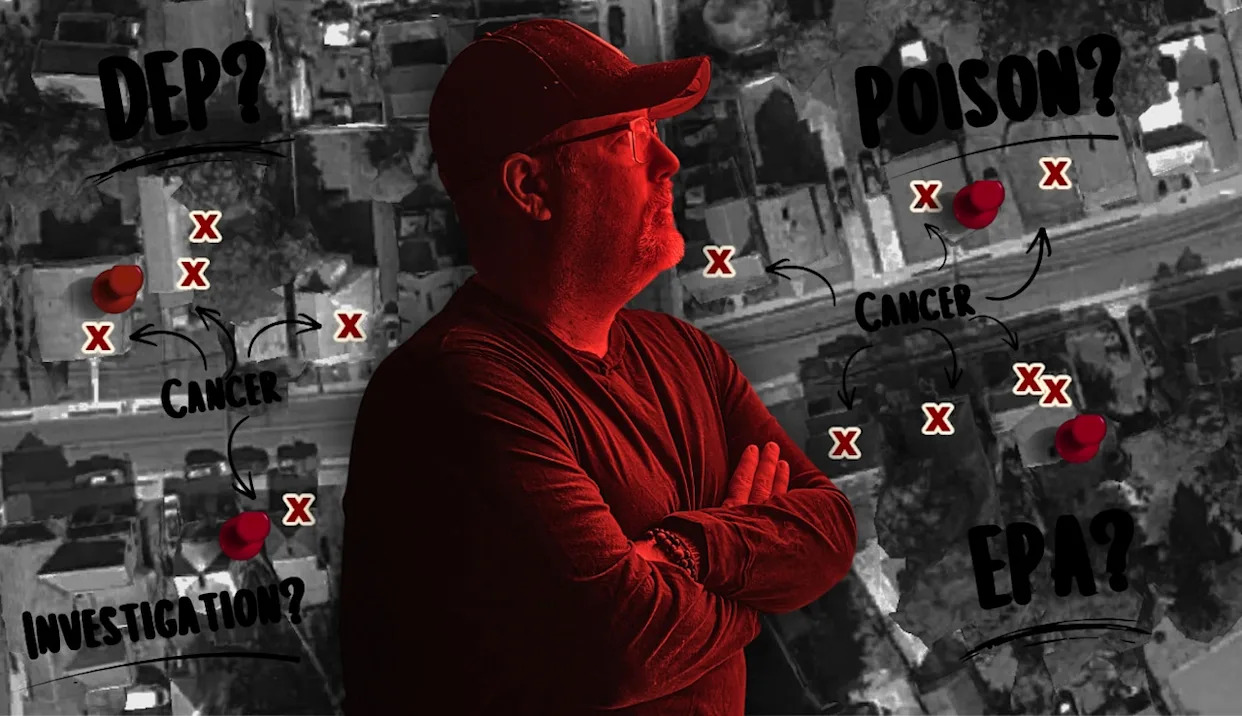
Ginger Morris can point to any house on the block and tell you who lives there. And whether or not they have cancer. “That white house had cancer. He left,” she told NJ.com on a recent walk through her neighborhood in Keyport. “Then the next house, Kim’s house. Jim had cancer and the girl that moved in there also had lung cancer.” She motions to a mint green multi-story home with white pillars. “He had colon cancer and a couple other types of cancer,” she says. “I don’t know what she had.” The 72-year-old — a 5-foot-tall Matawan transplant who goes by Ginger, not Ginlia or God forbid Mrs. Morris — noticed all the illness about a year ago, when her husband, Richard, started his own chemotherapy treatments for prostate cancer. Every call she made to her son, Rusty, who grew up in Keyport but now lives in Florida, seemed to come with a new mention of someone else fighting for their life. Rusty didn’t think it could be a coincidence. Keyport resident Ginger Morris walks down Walnut Street in Keyport on March 27, near an area where residents are concerned about carcinogens from a nearby landfill. Chris Pedota | For NJ.com So in February, Rusty, 46, pulled up a Google map with an overhead view of their Monmouth County neighborhood and started drawing red X’s. One on his house, representing his father’s cancer. Two X’s on another First Street house where his uncle and his uncle’s wife lived, both cancer patients. An X on the house across the street, where a man was in hospice care with cancer. Then he picked up the phone. “I started asking friends I grew up with around the neighborhood,” Rusty said. “It just kept freaking snowballing.” Lung, prostate, brain, stomach, colon, thyroid, breast, appendix, kidney, intestinal. They have a lot of different cancers. But they are all sick. His map of Keyport now has 41 red X’s on it, 28 of which are concentrated on and around First Street. Zoom out a bit and you can’t help but notice how chillingly close the blob of deathly X’s is to the old Aeromarine site — a shuttered dump that limited tests show has leached toxic waste and harmful chemicals into the air and water surrounding the Morris’ house for at least 50 years. Both of Rusty’s parents worked there. And ever since it was forced to close, demolished into a huge patch of open land near the beach — everyone in the neighborhood’s been there more times than they can count. It all made Rusty ask a question that takes years of research to answer: Is his old neighborhood New Jersey’s newest cancer cluster? “It looks like you have a crazy high percentage (of cancer patients). … When you’re looking at a map like that. That looks insane,” Dr. Alexis Mraz, of The College of New Jersey’s Department of Public Health, told NJ.com. “The other side of that coin is the reality (that Rusty Morris) probably has not gotten everyone in that neighborhood,” Mraz said, “so there are likely more cancer cases … I think it’s definitely worth looking into.” The Morrises and others on and around First Street are confused and terrified, staying up late at night wondering if the neighborhood they cherish has been slowly poisoning them for decades. The evidence they’ve collected so far is concerning and warrants deeper investigation, according to three medical experts independently contacted by NJ.com to review the numbers and the few environmental studies that have been done of the ex-dump. State oversight of the remaining contaminants in the area has been haphazard and inconsistent, locals say, and there has not been any federal intervention, records show. Doctors who reviewed the data caution that there are too many unknowns to say anything definitive at this point. But the area is one state investigators should take a special interest in, they urged. “Hearing this, understanding that this is a community that has been there … and members of this community are recognizing that there seems to be — in the households that have been interviewed — a higher number of people with cancer … I think that alone warrants more probing,” said Dr. Hari Iyer, a professor focusing on cancer epidemiology and health outcomes at Rutgers University’s Cancer Institute. Figuring out whether a neighborhood suffers from a higher-than-usual rate of disease is tough and time-consuming. Without more information and study — like collecting the ages of the patients and timing of their illness — it’s impossible to say how many cancer cases would be typically expected in an area like the one residents are concerned about here, the doctors said. Definitively saying whether those cancers could be linked to the pollution from the old dump is harder to prove, still. But the discoveries so far are significant, the doctors said, and it’s worth finding the answers to those questions. “This is where a more formal investigation of when patients were diagnosed with tumors most strongly linked to the carcinogenic chemicals released from the landfill from the 1990s onward would be informative,” Iyer said. But the site’s troubles date back long before the ‘90s. An aerial photo of the Aeromarine facility in Keyport estimated to be taken in the 1940s. Residents are worried that carcinogens and other toxins from the area could be linked to a large number of cancer cases among people who have lived nearby. Courtesy of Keyport Historical Society Archives The old Aeromarine landfill has been cited multiple times over the last five decades for being improperly sealed off, and for leaching at least five known carcinogens, as well as other toxins, into the area surrounding it. The site first housed a small aircraft firm that provided airplanes to the U.S. Army and Navy in the early 20th century. It was then a landfill for about 17 years, starting in 1962, and later an industrial park for several businesses including a railing company, an auto mechanic, a landscaping business and small production companies. The landfill was shut down in 1979 and the whole development was leveled in stages after that. Generations of teenagers have used the empty, roughly 50-acre tract as a hangout spot. “It sat there all this time,” Councilman Robert Bergen, who has served in various elected positions in Keyport for the past two decades, said of the contaminated landfill. “(The site owners) s--- on this borough for 40 years and it’s time to end. They have not operated in good faith.” An attorney representing the site’s longtime owner, New York-based Bay Ridge Realty, declined to comment. Others affiliated with the company did not respond to requests for comment. “The DEP is committed to ensuring proper closure of the landfill to protect the environment and public health,” the state Department of Environmental Protection said in a lengthy statement responding to NJ.com’s inquiries about the landfill and the possibility of a nearby cancer cluster. The state, the DEP said in its joint statement with the Department of Health, is working with both the current owners and a prospective buyer who is interested in developing the site – possibly into housing, local officials confirmed. After resident cries for help and probing from NJ.com, the DEP “has begun initial discussions to determine next steps,” in Keyport, the statement said. Those steps could include “requesting a public health assessment to evaluate the potential for public health implications from potential exposures” to contaminants at the old dump. New Jersey's Department of Environmental Protection and Health Department recounted environmental concerns at the Keyport landfill in a statement to NJ.com. Canva illustration for NJ.com/Photo by Chris Pedota | For NJ.com There are about 1,000 suspected cancer clusters in the country, the American Cancer Society notes, including several in the Garden State. Finding places on the map with higher-than-normal concentrations of cancer — where a glut of diagnoses are not just suspected but confirmed without a doubt by health agencies and tied to some environmental hazard — is extremely difficult, the ACS and various experts said. Investigations can be long-lasting and sometimes inconclusive. It takes a lot of data and time to confirm what Rusty Morris suspects in his gut. So he isn’t waiting for the official results. He’s making more calls, he’s Facebook-messaging people he hasn’t seen in decades. He’s warning his neighbors now. “When there are this many,” he said of the people who have gotten sick and of those who have died. “It’s pretty scary.” Aeromarine’s open front gate, originally a canary yellow but now red from rust, splits the word in two. AEROM — ARINE. Anyone can saunter in. The entrance to Aeromarine landfill property on Wednesday, April 15, 2026. The owners are facing fines from the New Jersey Department of Environmental Protection. Patti Sapone | NJ.com You can walk to the entrance on Locust Street from the streetside (the “Private Property” sign feels like a wry suggestion) or walk over a few piddling rocks to end up on the ex-landfill from the beachside. “Oh, we used to go and party there,” Kim Johnson-Burdge, 55, said laughing. “Everybody used to hang out in the woods and the cops would come and take our beer ball. I mean, we were kids.” Johnson-Burdge is helping Rusty with his de facto investigation. She now lives in Englewood, Florida — less than an hour away from her old Keyport friend. The memories in her neighborhood are good ones, but when she thinks about them now, her smile fades a bit. An eerie feeling lingers over a place where she thought she was having innocent fun. Was it normal for her to be diagnosed with ovarian cancer at age 36? Was it just bad luck that her father, Peter Matejczyk, a lifelong nonsmoker, was diagnosed with lung cancer? Matejczyk moved from Keyport to Englewood last August, learned of his lung cancer diagnosis and died in less than a year at age 77. Keyport resident Peter Matejczyk in a May 2025 photograph. A lifelong nonsmoker, Matejczyk was diagnosed with lung cancer and died less than a year later. Courtesy Kim Johnson-Burdge “I don’t want anybody to have to die because of this, because it’s an unknown thing. That it could be detrimental to our being,” she said of worries of a cancer cluster. “It was a shame that my father didn’t catch it earlier. We were hopeful that it would be treatable … once he got that diagnosis it was pretty quick.” The state Department of Environmental Protection ordered the shutdown of the Aeromarine site in 1979, citing “numerous operating/engineering deficiencies and overall exhaustion of capacity.” Bay Ridge Realty Corporation, which has not developed any major projects on the site since, has owned it since 1966, records show. In 2010, a California developer proposed building a solar panel farm and residential development at the site. The company hired an environmental consulting firm, Excel Environmental Resources, Inc., to study the tract. Excel’s investigation found problems in a large section of the landfill next to Raritan Bay, where proper engineering controls were missing and solid waste could easily flow onto the shore and into the bay, according to a 2021 lawsuit the town of Keyport filed against Bay Ridge Realty in an effort to force the cleanup of the site. Heavy metals that could be harmful, as well as chemicals and carcinogens like benzene and now-banned PCBs, or Polychlorinated Biphenyls, were found to have leaked into soil and groundwater from the dump, according to the lawsuit and study. Part of the old landfill is a “hot spot” of toxic, elevated levels of methane gas that “requires immediate mitigation,” the suit said. Contaminants have made their way to Chingarora Creek, a tributary that surrounds the Aeromarine landfill property, according to the analysis from the North Brunswick-based firm. A marsh in Keyport near an area where residents are concerned over the possible health impacts from a former nearby landfill. Chris Pedota | For NJ.com One or more points were observed at the site where heavy metals and chemicals — including cancer-causing benzene — leached from groundwater at the landfill’s base, the lawsuit said. And the entire site is not properly capped, a process that would help prevent the spread of pollution, the environmental assessment found. Though the site has not been found to have impacted local drinking water sources, those who live nearby could potentially have come into contact with the contaminants by walking on the grounds in and around the site, swimming or fishing in the nearby water, and even just breathing in the potentially harmful air circulating on First Street, experts said. They said more study is necessary to see exactly how and if exposure to contaminants could be linked to disease. Exposure via runoff, which storms can tend to cause on shore spots like this one, is another worry. Excel acknowledged but never responded to a request for comment on its findings. In its lawsuit, the town accused the site owner of “inflicting irreparable harm upon the environment, public health, public safety, and visitors to the property.” A judge dismissed the case in 2022, finding that the responsibility to manage the old dump — and force a cleanup — sat with the state’s DEP. To date, no such cleanup has been done. State inspections dating back to 1986 found pollution at the site. Sometimes it would be years between DEP inspector visits, sometimes more than a decade, records show. Each time, more issues were cited, but nothing happened to address them. The DEP issued its first fine to the company, for $15,000, in 2021. After Keyport’s lawsuit, the state in August 2024 fined Bay Ridge Realty almost $300,000 over pollution concerns. The citation noted the property owner still hadn’t properly closed off the landfill. In January 2025, the DEP raised that fine to nearly $900,000 after the company failed to address the citations. The fines remain unpaid. The owners of the former landfill are challenging fines by the Department of Environmental Protection. Canva illustration for NJ.com/Department of Environmental Protection Bay Ridge Realty is challenging them and will go before an administrative law judge in June. The exact details of the company’s basis for the challenge are not clear. A new environmental study has not been done in 16 years, locals say. It’s unclear what soil and water tests have been conducted on-site recently, if any. Keyport Mayor Rose Araneo referred NJ.com’s request for an interview to the borough business administrator, Hector Herrera, who has been on the job in Keyport for about three months. “I’m grateful that some residents have taken the time to start that research,” he said when asked about the potential cancer cluster. “I’m not really sure where that goes from here. It’s great that light is being shed on it.” Herrera confirmed that Pacer Group Holdings, a private real estate investment and development firm with offices in Ridgewood and Cohasset, Massachusetts, is considering buying the property and trying to decide what to do with it. “One of the ideas would be to have residential development there and we would be concerned about that,” Herrera said. Another possibility is to use the land as a truck storage facility, he said. A child's toy truck covered in sand sits on a ledge near the Keyport Harbor beach area, not far from the Aeromarine property in Keyport, New Jersey on Wednesday, April 15, 2026. Patti Sapone | NJ.com State officials say they are working with both Bay Ridge and Pacer to iron out an agreement that would clean up the contaminants at the site and finally cap it the right way. Pacer, the prospective buyer, would conduct soil, groundwater, soil-gas, and geotechnical testing on the property “to help facilitate the proper closure of the landfill,” the DEP said. Officials from Pacer did not respond to requests for comment. The timing of the potential sale, cleanup and state’s probe into the residents’ fears about health impacts all remain unclear. Johnson-Burdge’s sister-in-law, Heather Matejczyk, is tired of waiting. In February, after her father-in-law’s death and once she had learned of about a dozen cancer cases near the old dump, she’d had enough. She wrote to the state Department of Health. “Dear Cancer Epidemiology Services Team,” Matejczyk typed to the division that tracks cancer occurrences and causes. “I am writing to formally request information regarding whether First Street in Keyport, New Jersey, has ever been evaluated for a potential cancer cluster,” the Feb. 23 email, obtained by NJ.com, reads. She listed the cases she knew about. She detailed that her late father-in-law had lived on First Street for over 50 years. “We understand that anecdotal reports are not a substitute for statistical review,” she acknowledged to the state health department. “We are seeking objective public health data to better understand whether cancer rates in this area differ from expected county or statewide baselines.” For more than a month, she got no response from the state. Then on April 7, after NJ.com had contacted the Department of Health for comment, she received calls and an email asking for more information about her concerns. Matejczyk’s email took “a somewhat circuitous route through other units” before arriving at the right person, she was told by the state. The health department’s Cancer Inquiry Unit apologized for the delay in responding to her. The unit, it explained in an email, “has been struggling to address several concurrent cancer concern inquiries that were all received close together.” A “DO NOT TOUCH” sign lays in the sand on Keyport Harbor beach near the Aeromarine property in Keyport, New Jersey on Wednesday, April 15, 2026. It shows a photo of material that may be on the property and it has "elevated levels of arsenic." Patti Sapone | NJ.com Cancer is no stranger to Ron Peperoni. The ex-Keyport councilman is easy to talk to – “just one P!” in his last name, he jokes — and is quick to open up, even about his own illness. He’s a lung cancer survivor who attributes his diagnosis to working in New York City after 9/11. He also joined forces with Rusty Morris after developing his own concerns about cancer rates in the borough. “A lot of people don’t talk about it because, you know, it’s a tough thing to deal with,” said Peperoni. But he’s worried about what he says has been a lack of attention paid to the town’s former landfill. “There’s nothing being done over there. Which is wild to me that we know we have this cesspool, a garbage site,” Peperoni said. “Who knows, like back then they dumped everything in that thing and we’re okay with just letting this … the high tides come in and pull stuff out into the ocean, into the bay? Who knows where it’s leaking to with rain runoff and everything,” he said. Aeromarine is considered a “legacy landfill,” one that operated before the passage of stricter environmental protection laws in the 1980s, the DEP noted. Even legal dumping before that was “a Wild Wild West,” said Craig Benson, an emeritus professor of engineering at the University of Wisconsin-Madison and at the University of Virginia. “Everything just went in a hole in the ground. There were no rules. Hazardous waste went right in with everything else.” Federal officials at the Environmental Protection Agency did not answer direct questions on whether they’ve been involved in any oversight at the location, but said they’d help enforcement of a cleanup there if needed. “EPA remains in close coordination with NJDEP and will evaluate any information that suggests a potential federal role is needed to protect human health or the environment,” spokesman Stephen McBay told NJ.com. New Jersey has a long history with contamination from landfills and garbage dumping, as well as with other cancer clusters. More than 80 kids in Toms River — where chemicals and dyes were once discarded in the freshwater river and in the ground — were disproportionately diagnosed with cancer from 1979 to 1995. Although a study conducted did not expressly blame the surge in cancer cases on dumping by chemical and pharmaceutical corporation Ciba-Geigy, the company and two others paid out $13.2 million to dozens of affected Jersey Shore families. In 2022, a former graduate of Colonia High School discovered 122 people with ties to the school who had a primary brain tumor and another 75 people with other forms of brain cancer, NJ.com reported. Despite concerns, an emergency assessment of all 28 acres around the school yielded no traces of radiological contaminants. New Jersey houses the most Superfund sites of any state in the country. And cleaning and shutting down the state’s known toxic sites has been imperfect. Decades after federal EPA regulators deemed a Ringwood site clean, a NYU Langone study pointed to alarming toxin levels still around. Since Bay Ridge Realty was cited last year by the state, there hasn’t been much change at the site, said Greg Remaud, CEO of the NY/NJ Baykeeper. Remaud, who works with state leaders as head of the nonprofit tasked with protecting New Jersey waterways, is frustrated by what he says has been a lack of enforcement. “We are talking about an unclosed landfill that has been leaching into Raritan Bay for decades and property mismanagement that has long put the public and environment at risk,” Remaud, a Keyport resident himself, told NJ.com. “Every level of government…(has) been aware of this.” Bergen, the councilman, said the site’s owner, the state, and the borough itself all bear some responsibility in letting the dirty dump linger, under-the-radar, for so long. “I’ve talked to a lot of residents over the years,” he said, noting that past borough attempts to address the pollution haven’t panned out. “We need to get that landfill cleaned up.” It may happen. But the current and former state of the site weighs on the minds of the doctors who have seen Rusty’s cancer map and all of the red X’s, like foreboding scarlet letters, stamped around the neighborhood. The map is a “valuable clue,” said Dr. Scarlet Gomez, a professor in the Department of Epidemiology and Biostatistics at the University of California in San Francisco. She is the director of one of three cancer registries that cover The Golden State. She knows what it’s like to get a tip like this new one in Keyport. “The concern that you just described definitely would be something that we would follow up on,” Gomez told NJ.com, noting the multiple types of cancers in one cluster would be somewhat unusual if there is only one exposure. But it is possible. At least five carcinogens were found at the Aeromarine site, Dr. Iyer of Rutgers said after reviewing the 2010 environmental report: benzene, lead, arsenic, vinyl chloride and polychlorinated biphenyls. Those contaminants could cause cancers ranging from lung, breast, bladder, pancreatic, prostate and kidney to blood-based cancers like leukemia and lymphoma. The study concludes the site does pose a risk to people nearby, and recommends action be taken to limit exposure to the chemicals and the spread of contamination from the land, Iyer pointed out. Still, he cautioned, the information presented is not enough to directly link the cancers in the neighborhood to the contaminants in the soil and water surrounding it. One of the first pieces to the puzzle in Keyport is the age of the patients, Dr. Gomez said. Researchers would also need details about the specific tumors in residents with cancer, and exactly what the patients may have been exposed to, how, when, and for how long, among other things. “Unless somebody goes in and does an actual environmental assessment and actually conducts a (new analysis) to study those who are affected and those who weren’t affected, it’s difficult to make a definitive link,” Gomez said. The location of the old dump is also significant in how the contaminants may have spread outward, the experts said. “You don’t want a landfill that is going to be surrounded by water because you’re going to break down the membranes and have a better potential for leachate to get into groundwater,” Mraz, the TCNJ health expert, said. The beach in Keyport Harbor near a section of property where residents are concerned over the possible health impacts from a former landfill that has been cited by the New Jersey Department of Environmental Protection. The NJDEP has signs posted telling beachgoers to not pick up anything they find on the beach due to possible fragments of arsenic. Chris Pedota | For NJ.com Regardless, there is enough evidence, Gomez said, to warrant a much stronger push to clean up the site, whether or not the contaminants are linked to cancer in the community. “Why do we need to wait to see if it’s going to cause disease down the road?” she asked. Even without the designation of a cancer cluster, the Keyport site — if known to have pollutants potentially exposing residents — should be cleaned up, Gomez said. Until then, Rusty Morris keeps connecting with more people and tallying more cases. He added two more just last week. He shared screenshots of recent text threads laced with confusion and anger as old friends learn what he has: “Really.” “Wtf.” “That’s kinda crazy,” they reply to him. He continues to discover new stories from old neighbors. Like Susan Dente. Dente lost both her parents to cancer. Her mother had kidney cancer and her father had intestinal cancer. They moved right next door to the Aeromarine landfill site in 1986. Then her family moved nearby to First Street from 1987 to 2021. Her beige home is across the street from the Morris’s. Ginger babysat her kids. Susan no longer has a geographic connection to Keyport. But that’s offered little solace 700 miles away in South Carolina. “I was in that area for 40 years. We played over there. It’s just, if there’s something wrong with it … God forbid.” Rusty Morris has been tracking cancer cases in Keyport, his hometown, finding what he believes could be a cancer cluster. He is photographed at his current home in Florida. Courtesy Morris Family Read the original article on NJ.com. Add NJ.com as a Preferred Source by clicking here.