yahoo Press
Philippines warns of 'sabotage' after cyanide seizure in disputed South China Sea atoll
Images
1 / 10
2 / 10

3 / 10

4 / 10

5 / 10

6 / 10
7 / 10

8 / 10

9 / 10

10 / 10
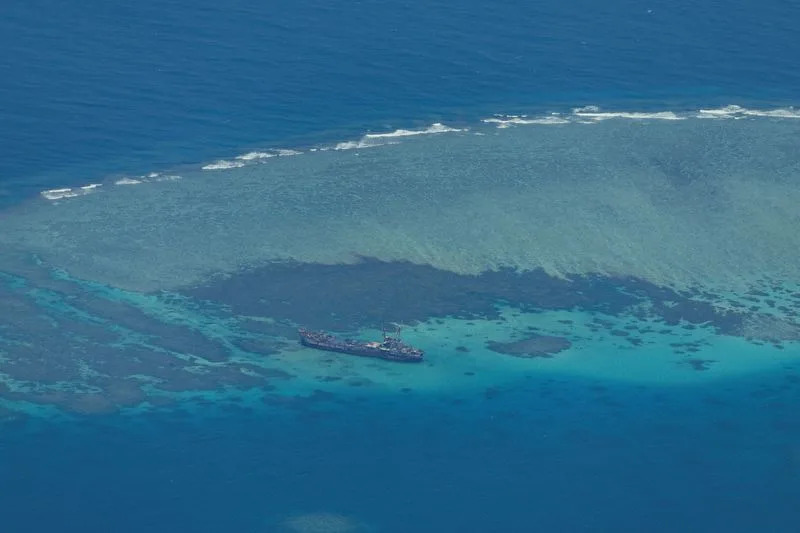
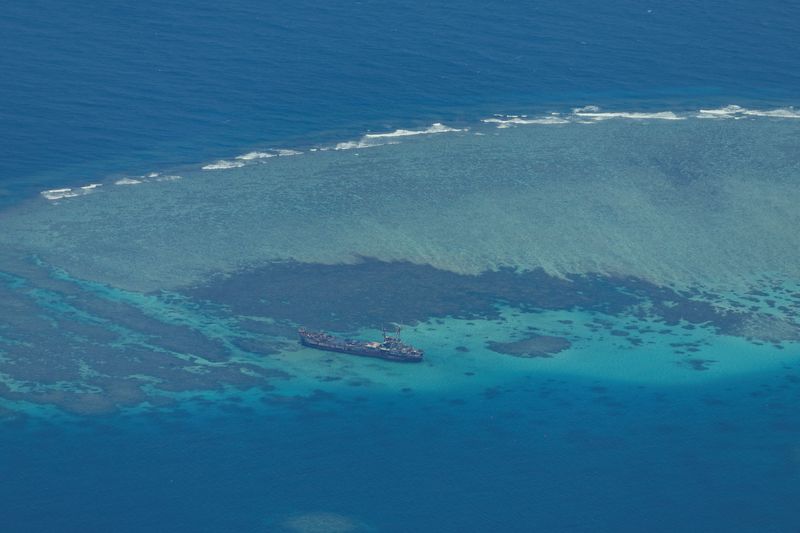
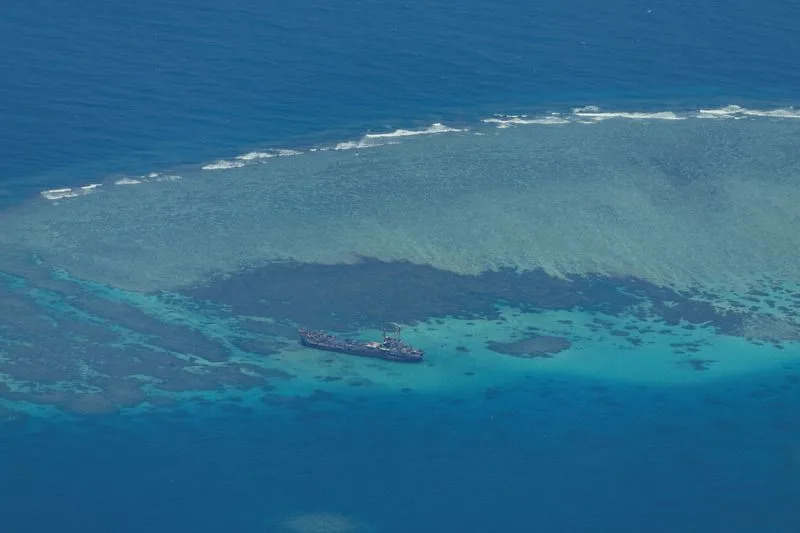
MANILA, April 13 (Reuters) - The Philippines discovered cyanide on Chinese boats operating around a disputed atoll in the South China Sea, security officials from the country said on Monday. Authorities said laboratory tests confirmed the presence of the highly toxic substance in bottles seized by the Philippine navy in operations at Second Thomas Shoal last year. Officials warned that the cyanide could have had serious consequences for marine life and weakened the reef supporting a warship that Manila grounded on the atoll to reinforce its maritime claim. "We wish to underscore that the use of cyanide in Ayungin Shoal is a form of sabotage that seeks to kill local fish populations, depriving Navy personnel of a vital food source," Cornelio Valencia, National Security Council spokesperson, told a press conference using the Philippines' name for the atoll. Valencia added that cyanide could damage the reef and "ultimately compromise" the warship's stability. The Chinese foreign ministry dismissed the Philippines' assertions, calling them a "stunt". "The Philippine side illegally harassed the Chinese fishing boats conducting normal fishing, grabbed the fishermen’s living supplies, and staged this so-called cyanide stunt. There is no credibility whatsoever to their story," foreign ministry spokesperson Guo Jiakun said on Monday. The shoal is within the Philippines' 200-nautical mile exclusive economic zone and located 1,300 km (808 miles) off mainland China, which refers to it as Renai Reef. The Philippines has accused China of disrupting resupply missions to troops on the vessel, including a June 17, 2024, incident that turned violent and resulted in a Filipino sailor losing a finger. China has denied allegations of aggressive conduct during such encounters and accused the Philippines of trespassing in its waters. The June confrontation later led to a provisional understanding for resupply missions to the grounded ship. China and the Philippines held high-level talks last month over the South China Sea, exploring preliminary steps towards oil and gas cooperation nL1N40V02J, and confidence-building measures at sea, including communication between their coast guards. The Philippine foreign ministry said in a statement on Monday the scope of the coast guard cooperation would be limited, and "does not contemplate cooperation in sensitive operational areas," adding that there had been no discussions on joint patrols. China claims nearly all the South China Sea, including areas claimed by Brunei, Malaysia, the Philippines, Taiwan, and Vietnam. A 2016 ruling by an international arbitral tribunal found Beijing's sweeping claims had no basis under international law, a decision China rejects. More than $3 trillion in annual ship-borne commerce travels through the waterway. (Reporting by Karen Lema; Editing by Kate Mayberry)