Press
Trump announces two-week ceasefire as Iran agrees to reopen Hormuz Strait
Images
1 / 7
2 / 7
3 / 7
4 / 7

5 / 7

6 / 7

7 / 7
Iran has said that safe passage through Hormuz will be possible through coordination with its armed forces.

Save

Share

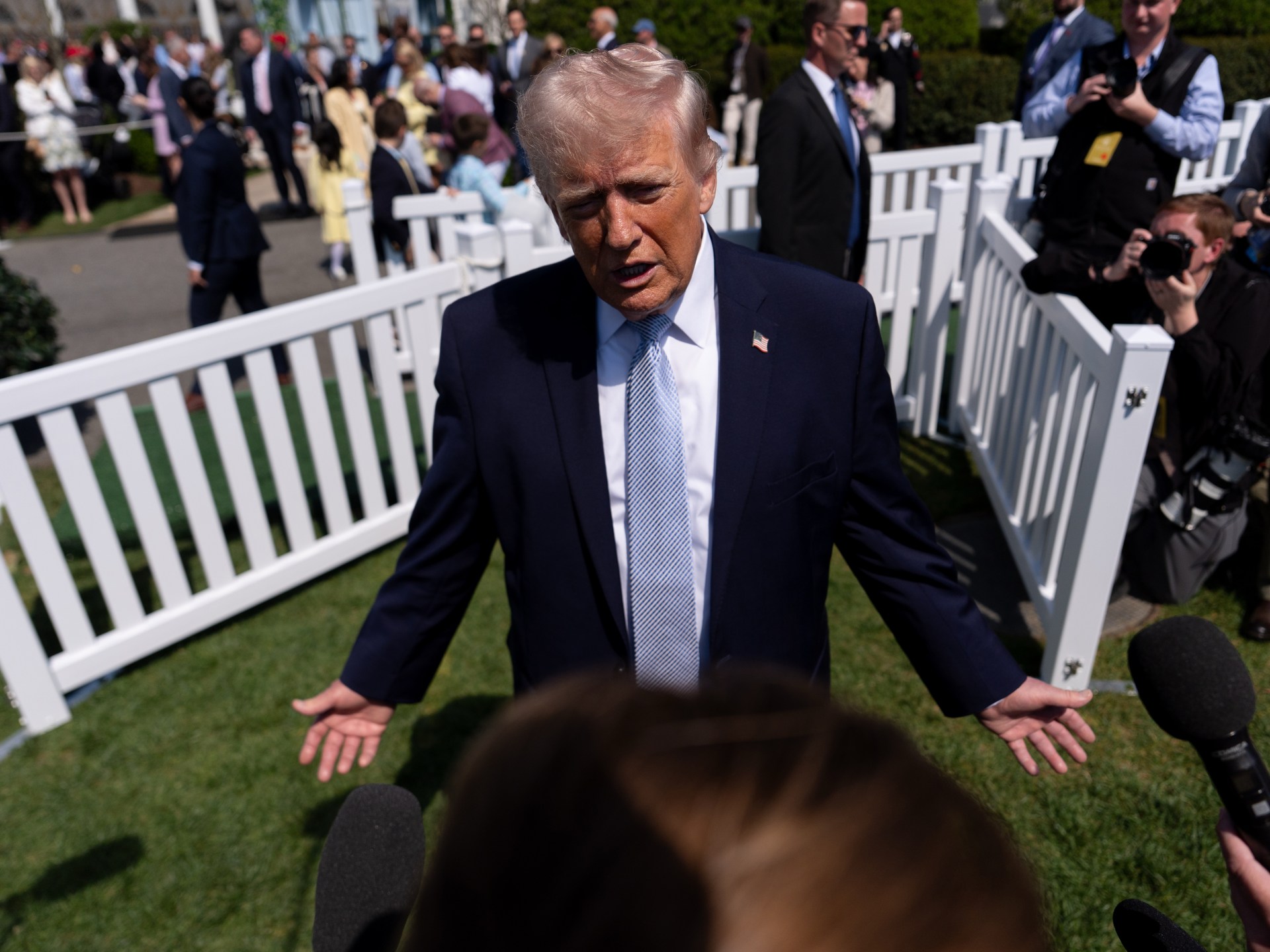
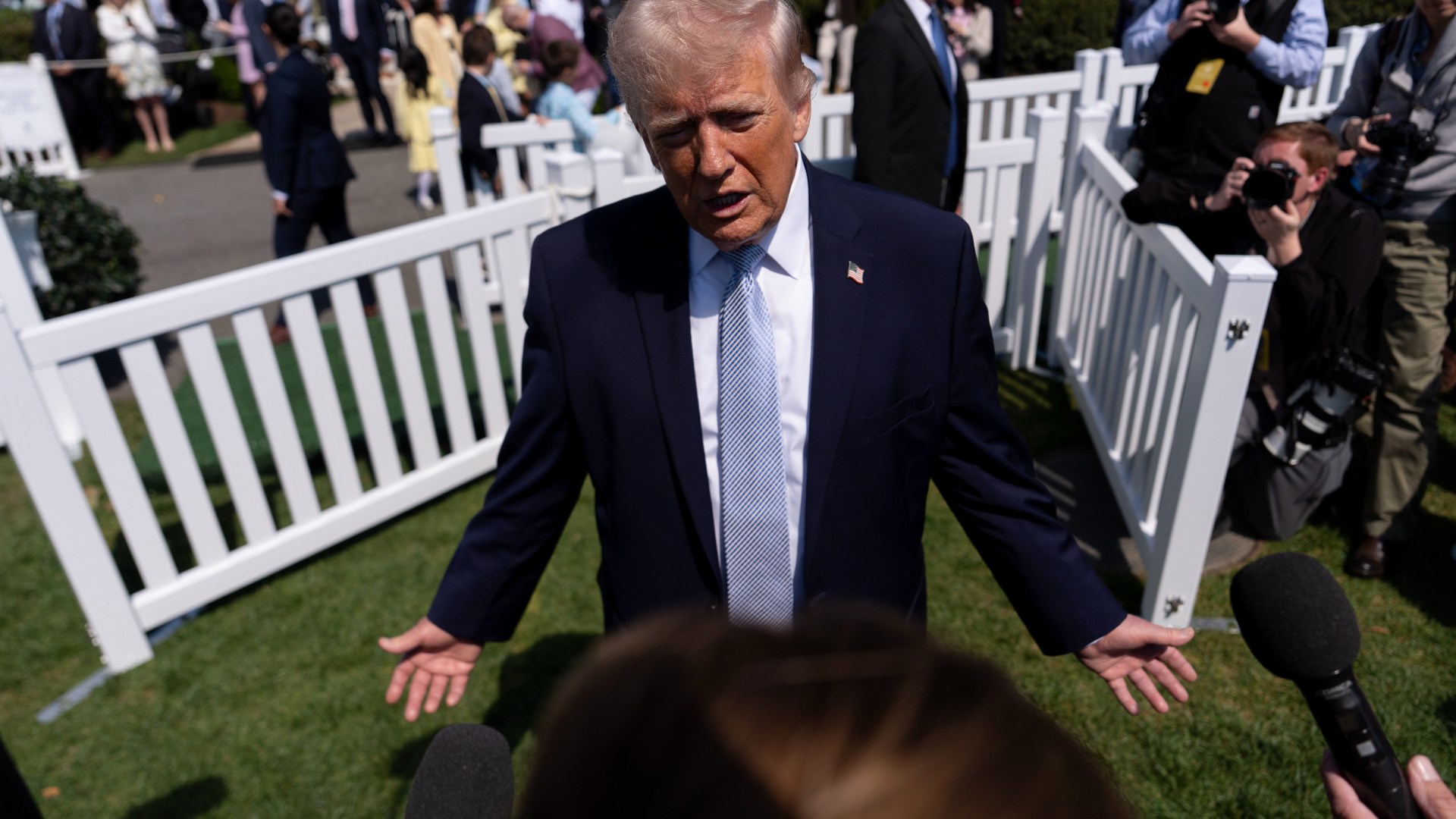
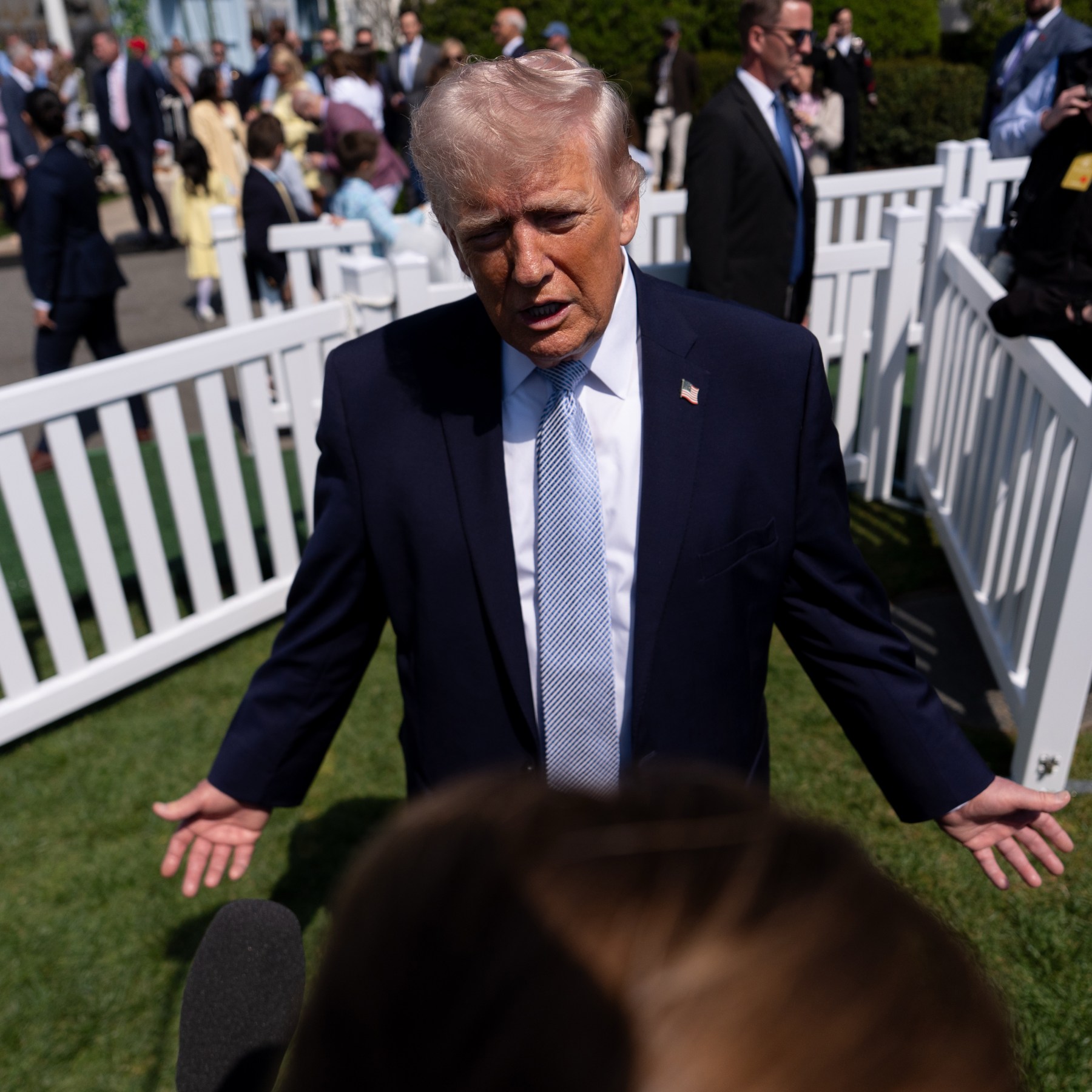
United States President Donald Trump has agreed to suspend his planned bombing of Iran for two weeks, following his threat that “a whole civilization will die tonight” if Tehran did not comply with his demands.

On Tuesday evening, within hours of the planned attack, Trump took to his platform Truth Social to announce he had reversed course.

He credited Pakistan for mediating the settlement, but warned it came with conditions – namely that Iran reopen the Strait of Hormuz.

“Based on conversations with Prime Minister Shehbaz Sharif and Field Marshal Asim Munir, of Pakistan, and wherein they requested that I hold off the destructive force being sent tonight to Iran, and subject to the Islamic Republic of Iran agreeing to the COMPLETE, IMMEDIATE, and SAFE OPENING of the Strait of Hormuz, I agree to suspend the bombing and attack of Iran for a period of two weeks,” Trump wrote.

The message was posted online at 6:32pm US Eastern time (22:32 GMT), just under one and a half hours before Trump’s 8pm (00:00 GMT) deadline for the attack.

Shortly after Trump’s message, Iran’s Minister of Foreign Affairs Abbas Araghchi confirmed that a tentative agreement had been reached.

“If attacks against Iran are halted, our Powerful Armed Forces will cease their defensive operations,” Araghchi wrote.

“For a period of two weeks, safe passage through the Strait of Hormuz will be possible via coordination with Iran’s Armed Forces and with due consideration of technical limitations.”

Araghchi likewise thanked Pakistan for its last-minute appeal to suspend the US bombing campaign. Iran’s Supreme National Security Council also hinted in a separate statement that the ceasefire could be extended beyond its initial two weeks if negotiations proceed favourably.

Further talks are expected to take place in Islamabad over the coming weeks.

In the lead-up to the Thursday evening announcement, there had been speculation that Trump might extend the deadline, as he has multiple times in recent weeks.

But tensions had mushroomed on Tuesday as the deadline inched closer – and after Trump himself posted a menacing message on social media that morning.

“A whole civilization will die tonight, never to be brought back again,” Trump had written. “I don’t want that to happen, but it probably will.”

He added that the evening deadline would mark “one of the most important moments in the long and complex history of the World”.

Trump had previously threatened to blow up power plants, bridges and other civilian infrastructure, actions that many legal experts said would amount to a war crime.

In his Tuesday evening message, the US president once again claimed victory over Iran and said that Tehran had delivered a feasible ceasefire proposal.

“This will be a double sided CEASEFIRE,” Trump wrote.

“The reason for doing so is that we have already met and exceeded all Military objectives, and are very far along with a definitive Agreement concerning Longterm PEACE with Iran, and PEACE in the Middle East. We received a 10 point proposal from Iran, and believe it is a workable basis on which to negotiate.”

Trump explained that the next two weeks would be spent finalising the agreement with Iran. But he voiced optimism that any past disagreements had been resolved.

“Almost all of the various points of past contention have been agreed to between the United States and Iran,” Trump said.

“It is an Honor to have this Longterm problem close to resolution,” he added.

Al Jazeera correspondent Osama Bin Javaid noted that Trump’s latest announcement was likely to be welcomed by US allies in the Middle East, who had been bracing for a heavy attack on Iran and the possibility of counterattacks.

“That is going to be a big sigh of relief, collectively from the region and beyond, because the alternative was so horrific,” Bin Javaid said.

“The level of anxiety around the region was extraordinary, and Donald Trump was the only person who could defuse it, because he’s the one who lit the fuse in the first place.”

Trump’s announcement was initially met with scepticism and confusion on the ground in Tehran, where some questioned how much of the conflict would be paused under the ceasefire.

“It’s not clear, at least not to me, whether he’s suspending what is already going on since the beginning of the war entirely, or he’s extending the deadline for that ultimate destruction of the power plants,” Al Jazeera correspondent Mohamed Vall said from Tehran.

The war has been raging for more than five weeks, since Israel and the US launched a joint military offensive against Iran on February 28.

Trump and Israeli Prime Minister Benjamin Netanyahu have argued that the offensive was necessary to eliminate Iran as a regional threat and prevent it from obtaining a nuclear weapon.

But legal experts have described the offensive as an unprovoked attack, in violation of international law.

Already, nearly 2,076 people have been killed in Iran since the start of the war. Another 28 people have been killed in nearby Gulf states.

The US, meanwhile, has lost 13 military members, while 26 people have been killed in Israel.

Shortly after the war erupted, Iran moved to choke off traffic in the Strait of Hormuz, a key waterway through which nearly 20 percent of the world’s oil and natural gas travels.

That has caused gasoline prices to skyrocket across the globe, including in the US, where Trump has faced domestic criticism, including from his conservative base.

For weeks, Trump has pressured key US allies, including NATO members and countries like Japan and South Korea, to join in the fight and reopen the strait.

He predicted that “many countries” would send warships, but none have moved to do so, beyond defensive manoeuvres.

Starting in late March, Trump began to threaten Iran’s energy grid if the strait were not reopened.

But each time, he pushed back the date for his planned attack. On March 23, he postponed his attack for a five-day period, citing progress in negotiations. Then, on March 26, as that deadline approached, he announced another delay until early April.

Experts say Tuesday’s two-week postponement raises critical questions, including whether Israel would abide by the ceasefire Trump has agreed to.

“Generally, Israel has tended to follow the directions of this particular administration, although some have argued that this administration is in the war because of Israel’s urging,” said Al Jazeera correspondent Mike Hanna.

There are also lingering concerns about whether Israel would agree to end its strikes against Hezbollah in Lebanon, as well as Iran’s other regional allies, as Tehran has demanded.

Trita Parsi, vice president at the Quincy Institute for Responsible Statecraft, said that it is absolutely possible for the US to rein in Israel’s attacks in the region, but it may come with a political cost for Trump and his Republican allies.

“ We haven’t seen Trump being able to sustain that pressure on the Israelis,” Parsi said.

Still, Parsi explained that Israel may not want to take the risk of defying Trump’s wishes, only to end up facing Iran alone.

“I don’t think that these Israelis actually can sustain themselves in a war with Iran without active American support. And if they’re doing it against American wishes, then, obviously, they would take a huge risk of seeing potentially the United States stay out of that war,” he said.

“The Israelis facing Iran alone is not a scenario that they want to be in.”