yahoo Press
AI-Quantum Supercycle: 4 Stocks to Watch in April With 50%+ Upside
Images
1 / 4
2 / 4

3 / 4

4 / 4
The technology sector may be entering what could become the AI–quantum supercycle, a multi-decade computing transition similar to the shift from mainframes to cloud computing. If the AI boom represented the first phase of the next computing revolution, the convergence of artificial intelligence, quantum computing and cybersecurity could represent the second phase, driven by rising cybersecurity risks, government funding and growing demand for computing power beyond classical limits.

While artificial intelligence has dominated markets since 2023, the next phase of computing innovation increasingly points toward quantum computing integrated with AI. Real-world examples are already emerging, including IBM developing quantum-centric supercomputing, which integrates AI, classical computing and quantum processors into a single computing architecture. The company has already demonstrated hybrid systems where quantum processors were paired with Japan’s Fugaku supercomputer to simulate complex molecules.

As a result, for technology-focused investors in April 2026, the strategy may be shifting toward owning large AI infrastructure leaders with quantum exposure while selectively adding pure-play quantum companies for long-term upside potential. The most balanced strategy may involve owning large-cap AI leaders with quantum exposure while selectively allocating to pure-play quantum companies for long-term upside potential with stocks like NVIDIA NVDA, Microsoft MSFT, IonQ IONQ and Rigetti Computing RGTI with more than 50% price target.

Industry data already suggests rapid growth in the convergence of AI and quantum computing. The global quantum computing market is projected to grow from about $2 billion in 2026 to more than $18 billion by 2034, representing high-growth emerging technology sector (Fortune Business Insights data).

Meanwhile, the broader next-generation computing market is expected to grow from roughly $243 billion in 2026 to nearly $888 billion by 2033, showing that advanced computing infrastructure is becoming a major macro technology theme (Coherent Market Insights data).

Within this trend, quantum computing for AI applications is expected to grow at more than 35% annually through the late 2020s, driven by optimization, machine learning and cryptography use cases.

One of the biggest catalysts accelerating investment into quantum computing is the concept of Q-Day, the moment when quantum computers can break modern encryption systems. However, the risk is not just a quantum story, it is increasingly an AI + quantum cybersecurity story, as artificial intelligence is now widely used in encryption, threat detection and cyber defense systems that could be vulnerable in a post-quantum world.

Recent research suggests the Q-Day timeline may be moving closer. Research from Google’s Quantum AI team indicates there is roughly a 10% chance that quantum computers could break public-key cryptography by 2032. New quantum resource estimates also show that elliptic-curve cryptography — widely used in blockchain, internet security and digital signatures - may be broken with significantly fewer qubits than earlier projections, accelerating the timeline for post-quantum cybersecurity migration.

At the same time, AI is increasing cybersecurity spending because AI-driven cyberattacks and automated hacking tools are becoming more sophisticated, forcing companies to invest in AI-powered cybersecurity platforms alongside post-quantum encryption. This means the next cybersecurity investment cycle may be driven by both AI threats and quantum threats simultaneously.

NVIDIA: Its GPUs power the vast majority of AI workloads and the company is increasingly involved in quantum simulation and hybrid computing research, where classical processors are used alongside quantum systems. As quantum computing development still relies heavily on classical simulation, NVIDIA stands to benefit from both the continued expansion of AI infrastructure and the early-stage growth of quantum research.

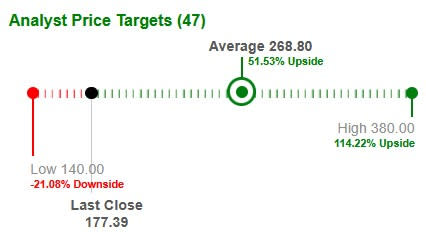
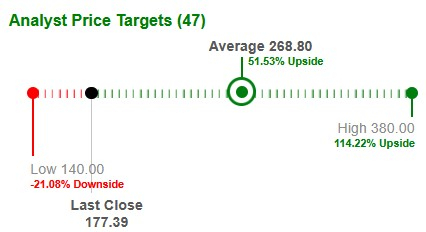
This stock currently sports a Zacks Rank #1 (Strong Buy). Based on short-term price targets offered by 47 analysts, the average price target of NVDA represents an increase of 51.5% from the last closing price.

You can see the complete list of today’s Zacks #1 Rank stocks here.

Image Source: Zacks Investment Research

Microsoft: Through its Azure Quantum platform, Microsoft is building an ecosystem that connects quantum hardware providers with enterprise users, while continuing to dominate in AI through its deep integration with OpenAI technologies and enterprise software. The company’s strategy focuses on making quantum computing accessible via the cloud, similar to how it scaled AI services.

This stock currently carries a Zacks Rank #3 (Hold). Based on short-term price targets offered by 46 analysts, the average price target of MSFT represents an increase of 57.9% from the last closing price.

Image Source: Zacks Investment Research

IonQ: It is one of the few publicly traded pure-play quantum computing companies and focuses on trapped-ion quantum computing systems. The company provides quantum computing access through major cloud platforms and has partnerships with government agencies and research institutions. While revenues remain relatively small compared to large technology companies, IonQ represents direct exposure to quantum hardware development and commercialization, making it a higher-risk, higher-reward investment tied closely to the growth of the quantum computing industry.

This stock carries a Zacks Rank #3. Based on short-term price targets offered by 12 analysts, the average price target of IONQ represents an increase of 128.7% from the last closing price.

Image Source: Zacks Investment Research

Rigetti: It is another pure-play quantum computing company developing superconducting quantum processors and offering quantum computing services through cloud platforms. The company focuses on hybrid quantum-classical computing, which aligns with the broader industry direction where AI, classical computing and quantum systems are used together for optimization and simulation problems.

This stock too carries a Zacks Rank #3. Based on short-term price targets offered by 10 analysts, the average price target of RGTI represents an increase of 133.3% from the last closing price.

Image Source: Zacks Investment Research

Want the latest recommendations from Zacks Investment Research? Today, you can download 7 Best Stocks for the Next 30 Days. Click to get this free report

Microsoft Corporation (MSFT) : Free Stock Analysis Report

NVIDIA Corporation (NVDA) : Free Stock Analysis Report

IonQ, Inc. (IONQ) : Free Stock Analysis Report

Rigetti Computing, Inc. (RGTI) : Free Stock Analysis Report

This article originally published on Zacks Investment Research (zacks.com).

Zacks Investment Research