yahoo Press
Fourth US Navy Supercarrier Has Headed To Sea, Conducting ‘Routine Operations’
Images
1 / 11
2 / 11

3 / 11

4 / 11

5 / 11

6 / 11
7 / 11
8 / 11

9 / 11

10 / 11

11 / 11
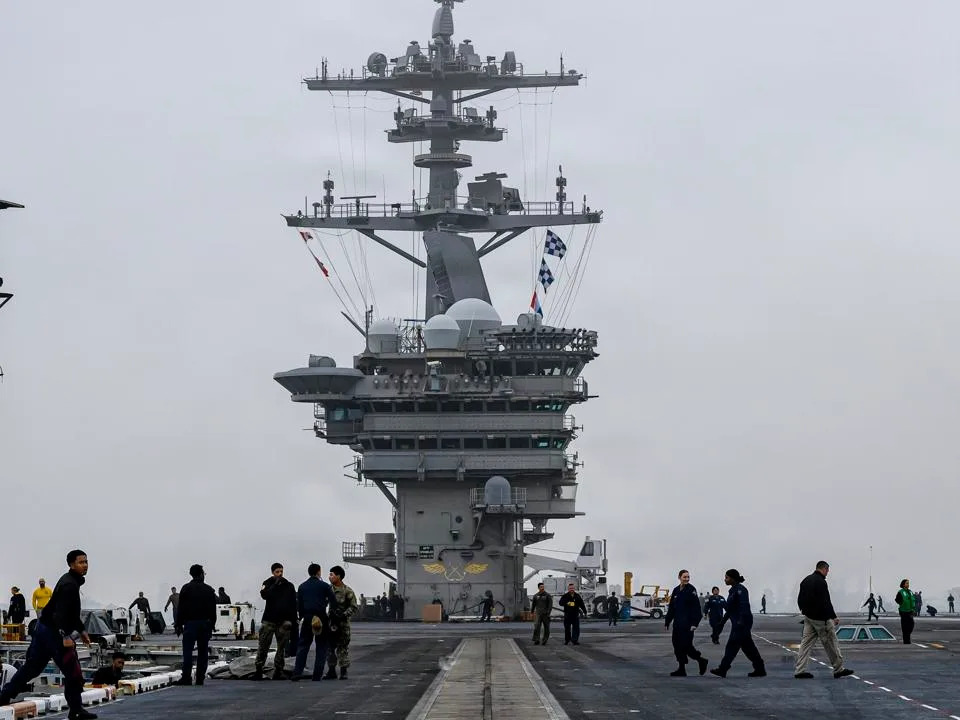
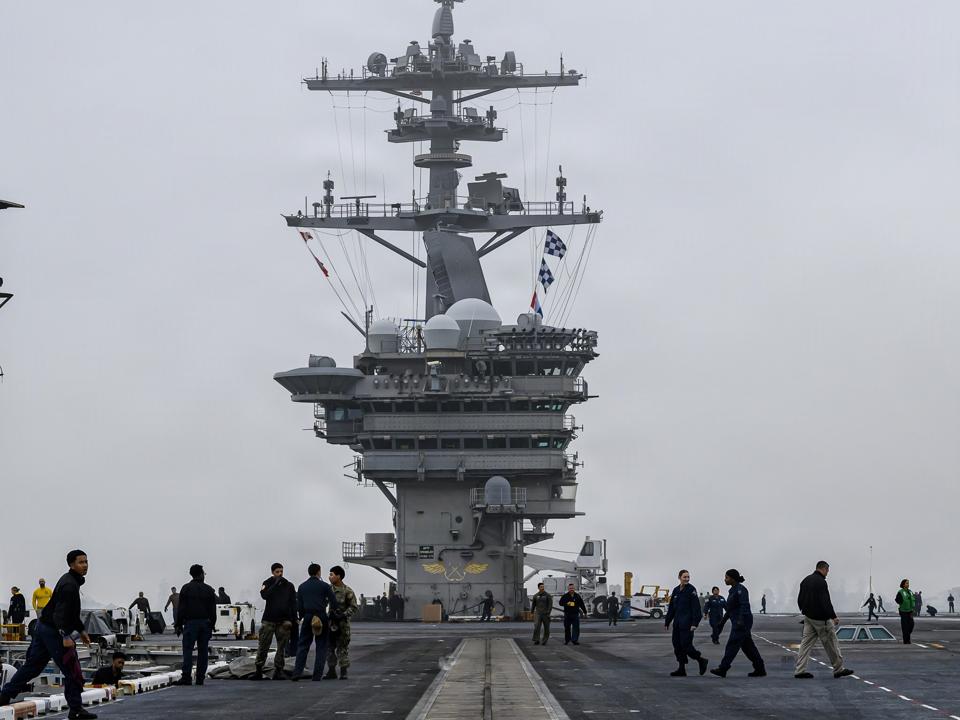
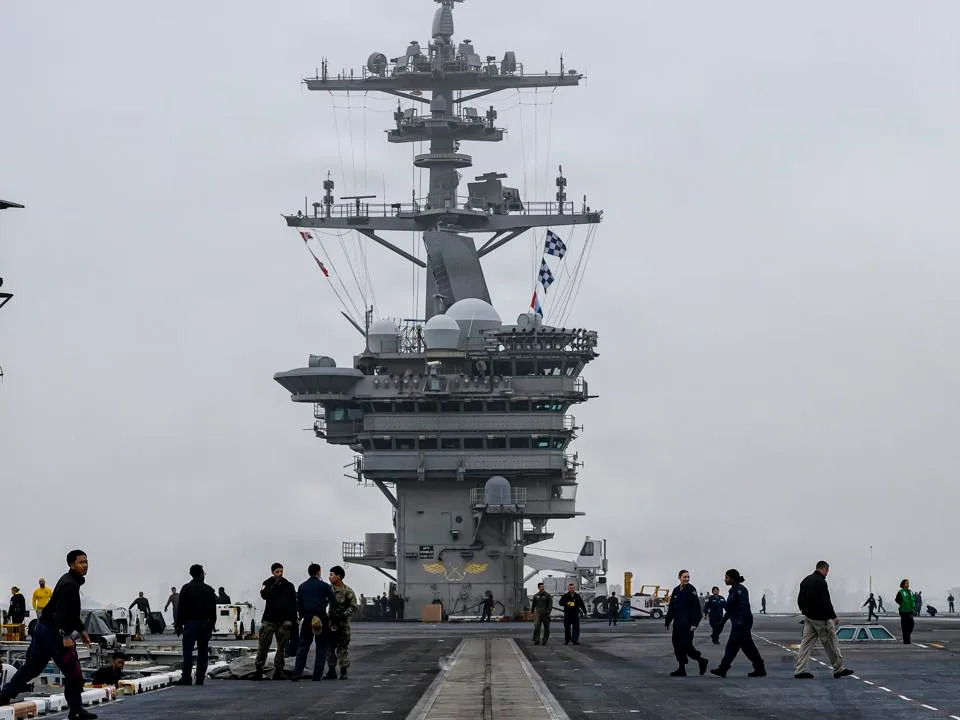
U.S. Navy Sailors work on the flight deck of the Nimitz-class aircraft carrier USS Theodore Roosevelt (CVN 71), Mar. 28, 2026.

Another United States Navy nuclear-powered supercarrier is preparing for an upcoming deployment, but that could still be several weeks away. The USS Theodore Roosevelt (CVN-71), the fourth Nimitz-class nuclear-powered aircraft carrier, departed from Naval Base San Diego on Sunday to conduct what the U.S. Navy said were “routine operations.”

The aircraft carrier has been preparing for her upcoming deployment for several months, including conducting fleet replacement squadron carrier qualifications off the West Coast earlier this week. The pre-deployment training cycle will require several more evolutions before the supercarrier heads out on her next mission.

There is speculation that CVN-71, named for the 26th president of the United States, could head to the Middle East later this spring, likely to relieve the USS Abraham Lincoln (CVN-72), which has been operating in the region since January.

CVN-71 returned to her homeport of San Diego in October, 2024, following a nine-month deployment that included operations in the U.S. 3rd, 5th and 7th Fleet areas of responsibility. During that deployment, USS Theodore Roosevelt, the flagship of Carrier Strike Group 9, took part in Operation Prosperity Guardian, protecting commercial shipping in the Red Sea and Gulf of Aden and deterring Houthi rebels.

Although it isn’t clear if USS Theodore Roosevelt will be sent to the Middle East when her deployment begins, it would be familiar waters for the warship.

Nicknamed “The Big Stick,” a reference to President Theodore Roosevelt’s famous foreign policy adage, “Speak softly and carry a big stick,” CVN-71 was launched in October 1984 and commissioned in October 1986. USS Theodore Roosevelt began her maiden deployment in late December 1988 with Carrier Air Wing Eight embarked.

Just over two years later, USS Theodore Roosevelt was deployed to participate in Operation Desert Shield and arrived in the Persian Gulf in mid-January 1991.

During the subsequent Operation Desert Storm, which began just the day before the carrier arrived on station, CVN-71 took part in combat operations where pilots flew more than 4,200 sorties, more than any other carrier. In total, aircraft operating from USS Theodore Roosevelt dropped more than 4.8 million pounds of ordnance.

Aircraft operating from the carrier later took part in patrols during Operation Provide Comfort to support Kurdish forces in Iraq, and then a year later in Operation Deny Flight to support the U.S. no-fly zone over Bosnia. CVN-71 then became one of only a few nuclear-powered warships to that point to transit the Suez Canal when she was deployed to participate in Operation Southern Watch over Iraq.

USS Theodore Roosevelt began her seventh deployment just after the September 11, 2001, terrorist attacks on New York City and the Pentagon. CVN-71 joined USS Enterprise (CVN-68) and USS Carl Vinson (CVN-70) and conducted attacks against al-Qaeda forces in Afghanistan during Operation Enduring Freedom. While deployed in the region, USS Theodore Roosevelt spent a total of 160 consecutive days at sea and broke the record for the most extended period underway of a U.S. carrier since World War II.

Even as it could be several weeks before USS Theodore Roosevelt could head to the Middle East, other warships could arrive later this month. The USS George H.W. Bush (CVN-77) departed from Naval Station Norfolk, Virginia, on Tuesday, beginning her latest scheduled deployment.

The U.S. Navy hasn’t confirmed where CVN-77, the 10th and final Nimitz-class nuclear-powered supercarrier, will head. Still, it is very likely that she will head to the Middle East to relieve the Norfolk-based USS Gerald R. Ford (CVN-78), which is now undergoing repairs in Split, Croatia. CVN-78, the Navy’s newest and largest carrier, has seen her deployment extended, and last month the flattop suffered a serious fire in her laundry facilities.

In an address to the Washington, D.C.-based Center for Strategic and International Studies, Chief of Naval Operations Adm. Daryl Caudle praised the crew’s efforts to control the blaze but acknowledged that the fire still hindered combat operations against Iran, CNN reported.

“They fought that, put it out, and started flying sorties two days after that, so I’m very proud of that crew,” Caudle.

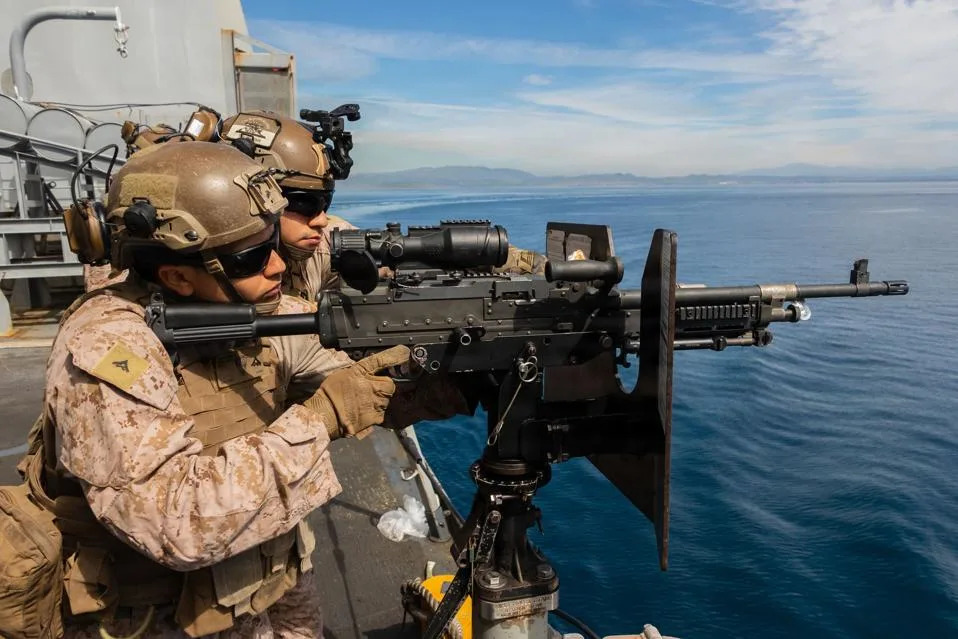
U.S. Marine Corps Lance Cpl. Salvador Cisneros, left, and Lance Cpl. Joshua Solorzano, both field artillery cannoneers with Echo Battery, Battalion Landing Team 3/5,11th Marine Expeditionary Unit, provide security for a defense of the amphibious task force drill aboard San Antonio-class amphibious transport dock ship USS Portland (LPD 27)

It was also two weeks ago that the San Diego-based Wasp-class amphibious assault ship USS Boxer (LHD-4) began her 2026 deployment, with 2,200 Marines from Camp Pendleton. LHD-4 was joined by the Whidbey Island-class dock-landing ship USS Comstock (LSD-45) and the San Antonio-class amphibious transport dock USS Portland (LPD-27). The vessels are now headed to the Middle East.

It will add to the build up of U.S. military personnel already in the region.

The U.S. Navy confirmed last week that the America-class amphibious assault ship USS Tripoli (LHA-7) is now operating in the U.S. Central Command area of responsibility. The flagship of the Tripoli Amphibious Ready Group is carrying units of the 31st Marine Expeditionary Unit, a rapid-response force of 2,200 personnel based on Okinawa, Japan.

This article was originally published on Forbes.com